

 Follow
 Rekomendasi
7 Ways to Clean Yellowing and Mossy White Garden Stones, It's Actually Easy
Are your white garden stones starting to yellow and grow moss? Check out 7 ways to clean white garden stones to make them bright, clean, and pleasant to look at.
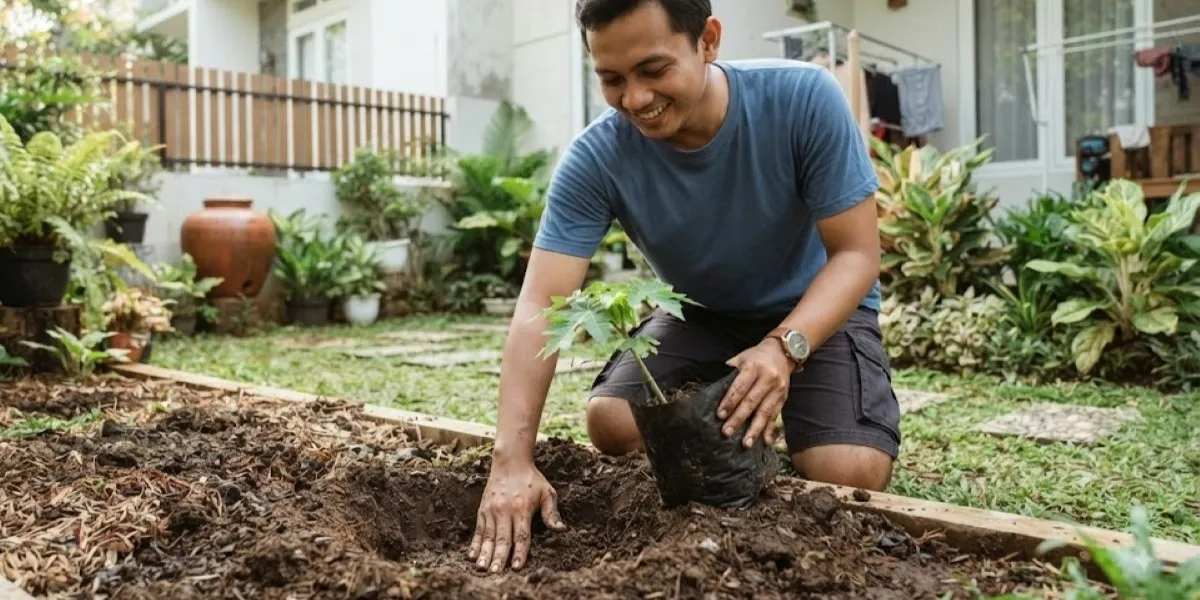
Kapanlagi.com - Who wouldn't be tempted to see a papaya tree in their yard bearing abundant fruit, bright orange in color, and sweet and juicy in taste? Besides saving on fruit shopping, growing this type of papaya, California or callina, can actually be a form of "healing" on weekends, especially if the results are so plentiful that you can share them with your neighbors.
Growing California papaya for abundant fruit is actually not as complicated as it seems, as long as you know the secret tricks from seed selection to precise fertilization techniques. The main key lies in consistent care and understanding the "language" of the plants, so they thrive without needing hectares of land.
Now, for those of you who are still beginners or have experienced harvest failures, don't worry because this time we will thoroughly explore the secrets complete with scientific data and kitchen tips that will boost your enthusiasm. Here are the ways to grow California papaya for abundant fruit from various sources, Tuesday (11/8/2026).
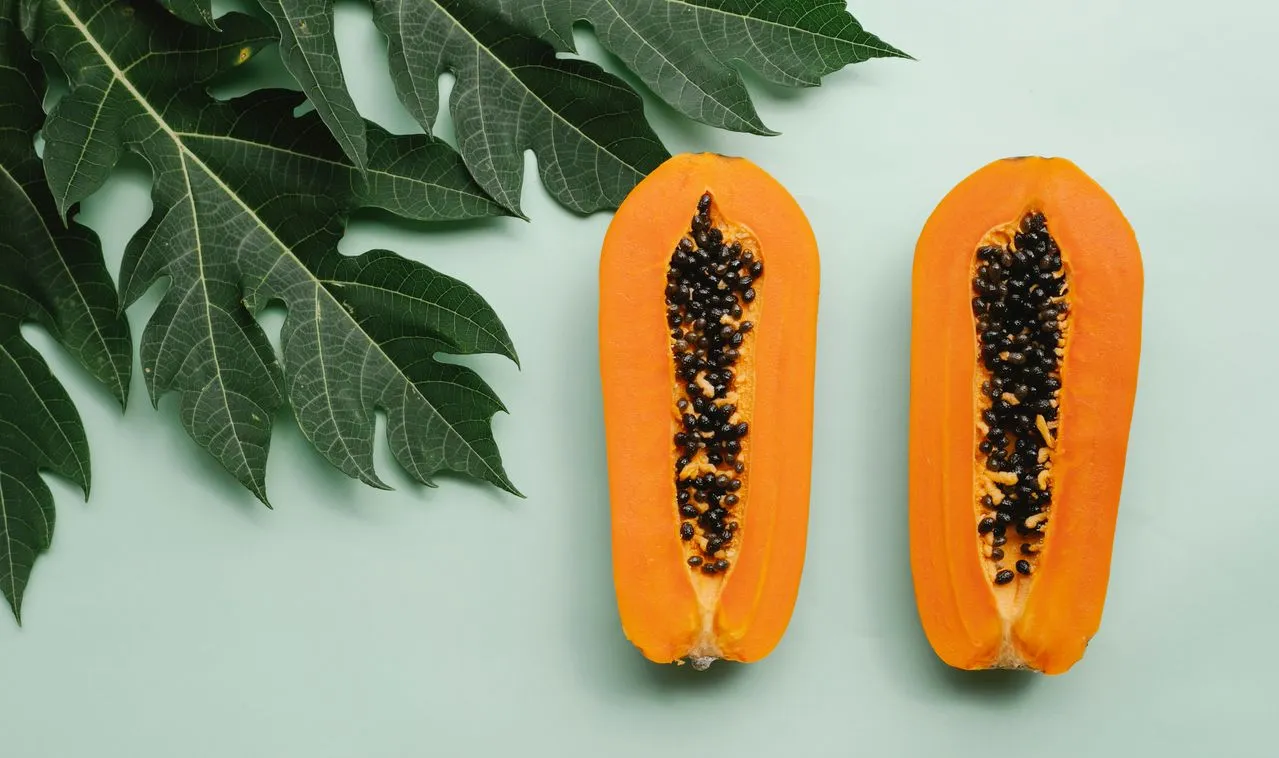
How to Plant California Papaya for Abundant Fruit (Photo: Pexels)
Before we dig the soil, it is important to know that the California papaya we often buy at the supermarket is actually a variety native to Indonesia. This variety is called IPB-9 or Callina, discovered by Prof. Dr. Ir. Sriani Sujiprihati from the Bogor Agricultural Institute (IPB).
Why is this variety so popular?
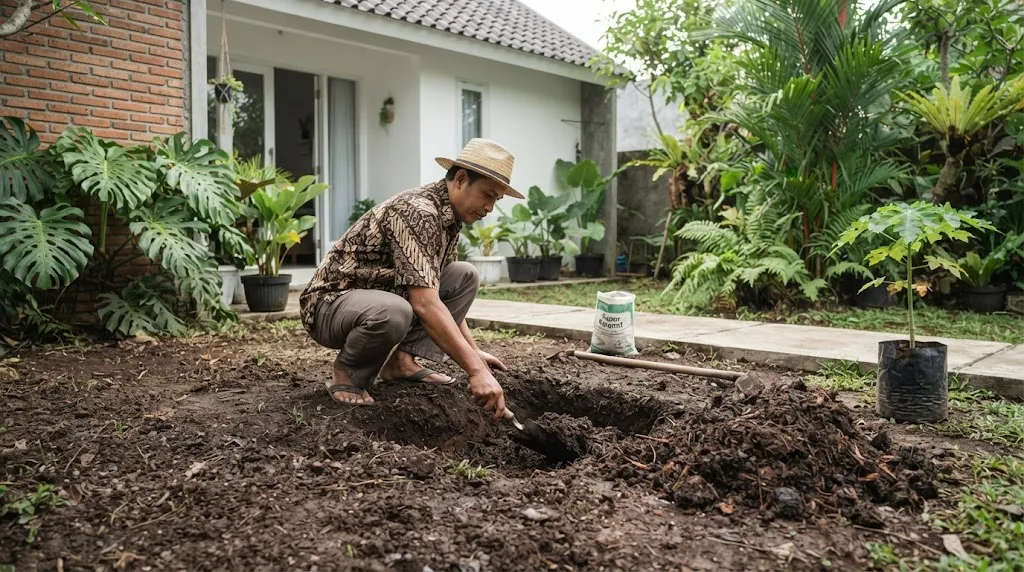
How to Plant California Papaya for Bountiful Fruit (Photo: AI Generated)
The first step is to prepare a comfortable "home". California papaya is very particular about water; they need water but hate standing water. If your soil is too wet, the roots will rot.
Expert Tips: Mix the topsoil with well-rotted manure (about 10-20 kg per hole). This will be the "first food" for your baby papaya.
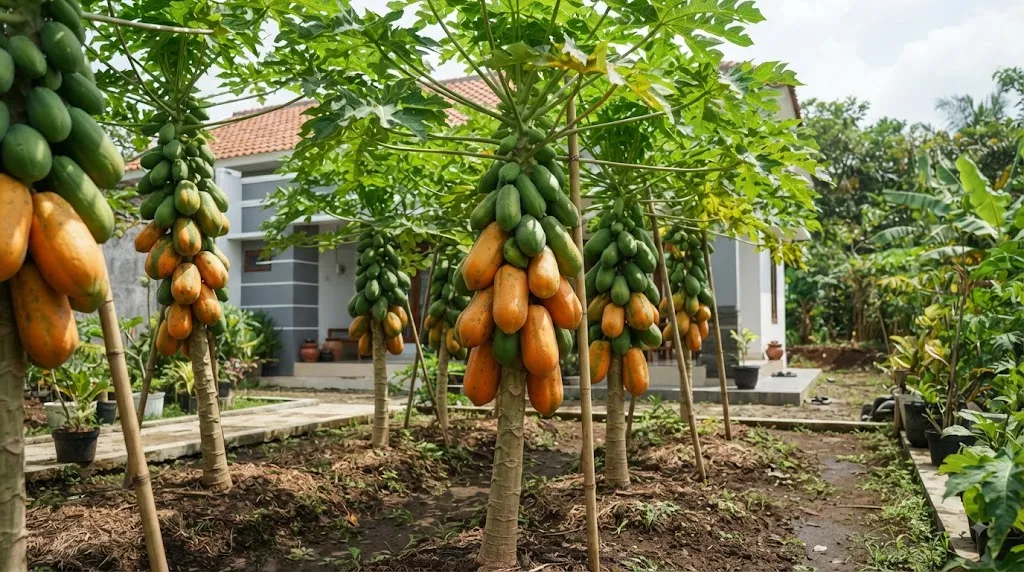
How to Plant California Papaya for Abundant Fruit (Photo: AI Generated)
This is a common mistake for beginners: planting too closely to fit many. In fact, the wrong planting distance causes trees to compete for sunlight and be vulnerable to mold.
According to the book Papaya: Biology, Cultivation, Production and Uses by Parmeshwar Lal Saran et al. (2016), proper spacing is crucial for optimal air circulation and sunlight penetration.
The ideal distance for California papaya is 2.5 m x 2.5 m or 2.5 m x 2.75 m. With this spacing, you can plant about 1,200 trees per hectare, or adjust it according to the size of your yard.
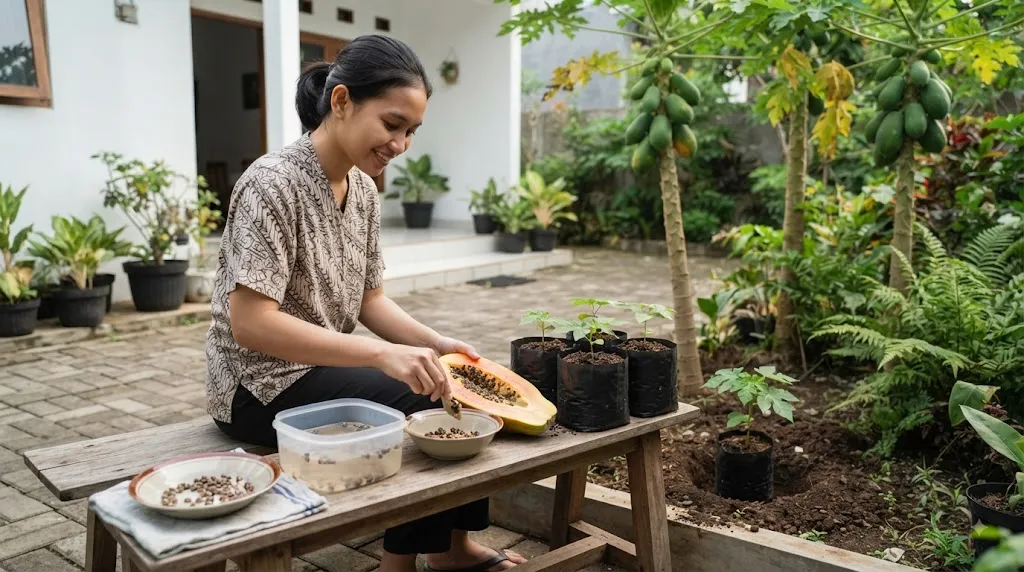
How to Plant California Papaya for Bountiful Fruits (Photo: AI Generated)
If you want to save money, you can take seeds from perfectly ripe papaya fruits on the tree. But there are conditions:
The seedlings are ready to be transplanted to the field when they are 1–1.5 months old or have 4–5 true leaves.
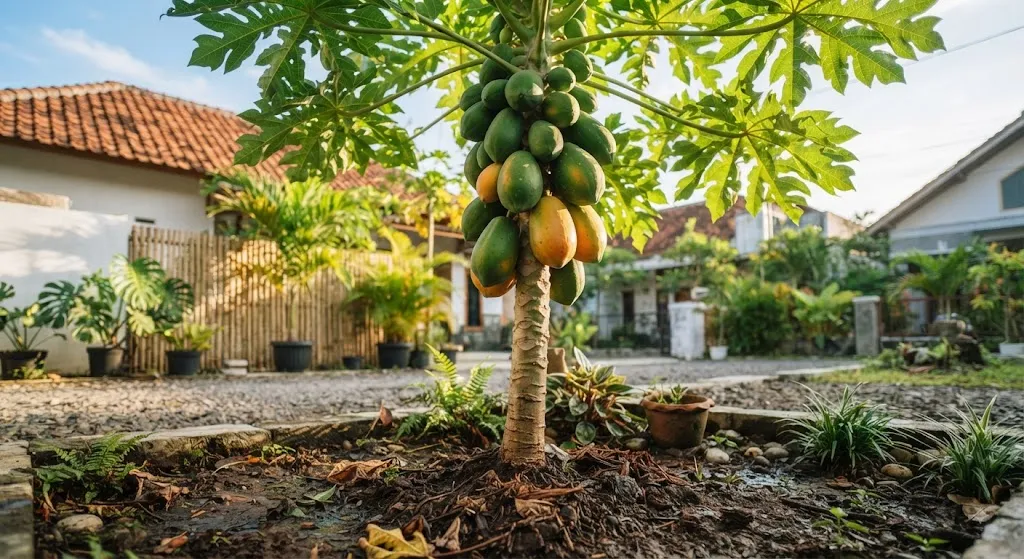
How to Plant California Papaya for Bountiful Fruits (Photo: AI Generated)
The best time to plant is in the afternoon when the sun is not too harsh. Insert the seedlings upright, gently compact the soil around them.
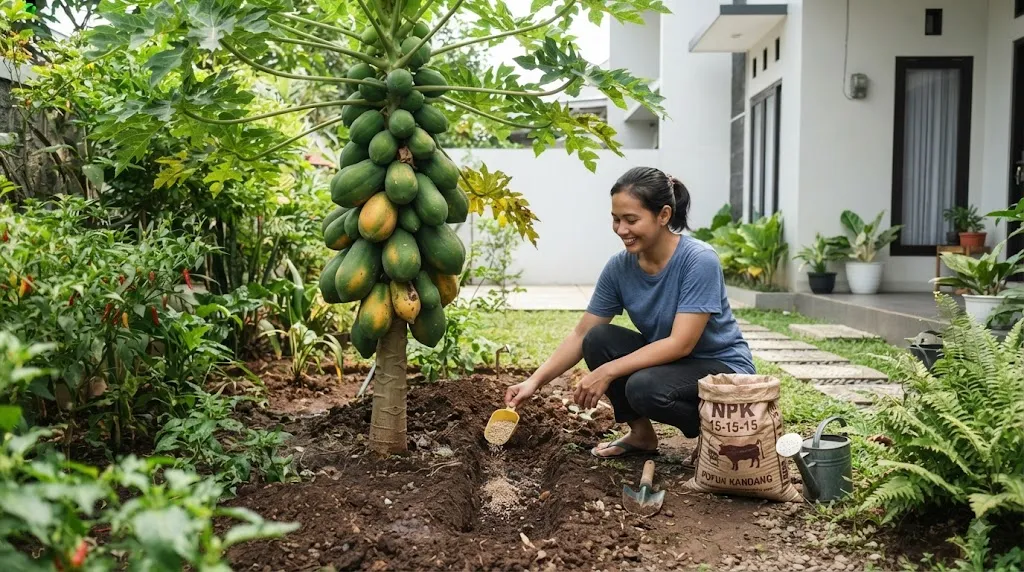
How to Plant California Papaya for Abundant Fruit (Photo: AI Generated)
For abundant fruiting, papaya needs super nutrition. Don’t skimp on fertilizer. Here’s the feeding schedule:
In the journal Standardization of Spacing and Soil Volume Wetting for Drip Irrigation in Papaya (2026), it is mentioned that consistency in water and nutrients can increase fruit weight by up to 20%. So, don’t be lazy in watering and fertilizing.
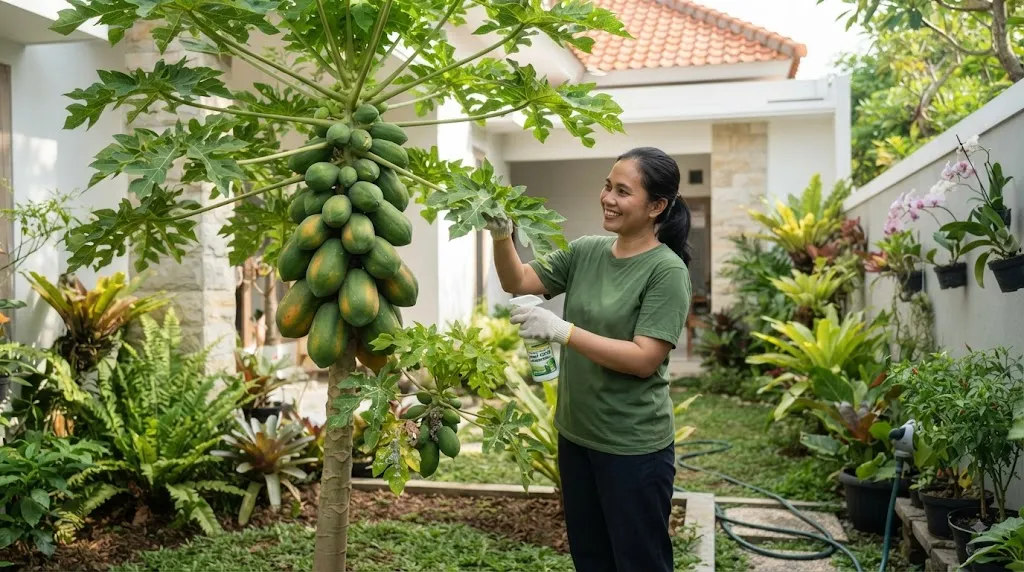
How to Plant California Papaya for Abundant Fruit (Photo: AI Generated)
The main enemies of California papaya are whiteflies (Paracoccus marginatus) and Anthracnose (black spots on the fruit).
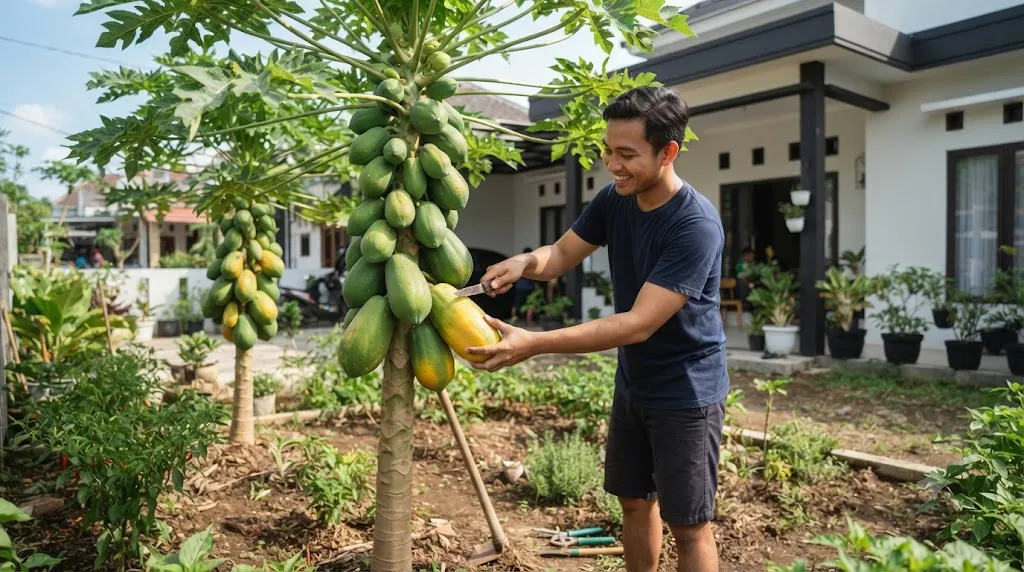
How to Plant California Papaya for Abundant Fruit (Photo: AI Generated)
The moment we've been waiting for has arrived. California papaya can be harvested for the first time at 8–9 months of age. The sign that the fruit is ready to pick is the appearance of a yellowish hue on about 25% of the skin at the tip of the fruit.
Planting California papaya is not just about the fruit yield, but also the inner satisfaction of seeing the tree you care for grow lush. By following the guidelines above, you are one step closer to becoming a successful millennial farmer in your own yard.
Q: Can California papaya be planted in pots (container gardening)?
A: Absolutely! Because this variety has a short stem, it is suitable for container gardening. Use a pot with a minimum diameter of 60 cm or a used drum. Make sure the planting medium is very porous (a mix of soil, burned rice husk, and manure) so that water does not pool, and perform regular fertilization every 2 weeks since nutrients in pots are limited.
Q: Why do my papaya flowers keep falling off and not turn into fruit?
A: Flower drop is usually caused by two main factors: lack of water (drought stress) or insufficient potassium (K) nutrients. Ensure adequate watering, especially during the flowering phase, and add KCL or MKP fertilizer when the plant starts to develop flower buds. Extreme weather, such as continuous rain, can also trigger natural drop.
Q: How long can California papaya live and produce fruit productively?
A: The optimal productive lifespan of California papaya is up to 3–4 years. After 4 years, fruit productivity usually declines drastically, and the size of the fruit decreases. Commercial farmers typically rejuvenate (replant) the garden after the plants exceed this maximum productive age to maintain the quality and quantity of the harvest.
(kpl/ibr)
Cobain For You Page (FYP) Yang kamu suka ada di sini,
lihat isinya
Are your white garden stones starting to yellow and grow moss? Check out 7 ways to clean white garden stones to make them bright, clean, and pleasant to look at.
Discover the complete guide on how to grow Tamarillo in your home garden, from seed selection to harvest. Realize an exotic fruit garden rich in nutrients easily.
Discover effective ways to care for the Tabebuya tree to encourage frequent flowering with these eight easy steps.

Transform your life to be more successful through these 12 magical micro habits. Starting with small, routine habits, your dreams can become a reality quickly.
Discover 6 best drinks for brain health that you can consume every day.

Liking to compare others can reflect certain character traits. Recognize 8 characters of people who like to compare others according to psychology.

Paper towels are often used for cleaning, but there are several items that should not be cleaned with paper towels. Check out the explanation here.
Keeping croton stunning on a porch exposed to scorching heat requires special strategies. Learn how to care for croton so that its leaves remain bright and not burnt, from watering to protection.

Explore the challenging world of journalism through recommendations for movies about journalists. From investigating major scandals to ethical dilemmas, witness their struggles to uncover the truth.
Plants that make homes cooler can serve as natural shade while making the yard feel more lush and comfortable.
How to plant red onions without extensive land is now easier to do at home, utilizing various innovative methods for abundant harvests.
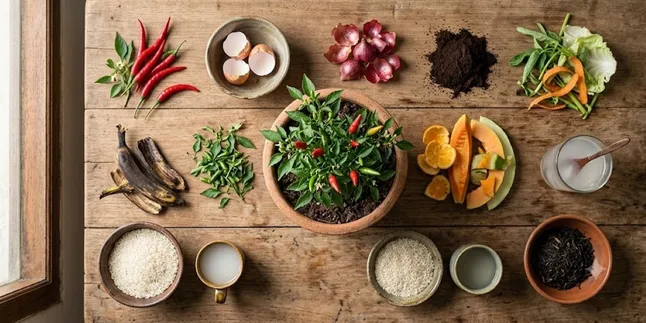
Check out 10 kitchen ingredients that can be used to care for chili plants to help them grow lush and bear fruit abundantly naturally.
