Kapanlagi.com - The method of fertilizing chili plants for quick flowering and fruiting actually cannot be achieved just by adding a lot of fertilizer, as the plants need a balance of nutrients, sunlight, water, root conditions, and a supportive growing environment. Chili plants that appear lush with green leaves and strong stems may not necessarily produce flowers and fruits in optimal quantities if their nutritional needs do not match their growth phase.
In addition to fertilization, attention to the growing medium and daily care habits also affect the plant's ability to enter the generative phase. By providing regular and not excessive care, chili plants can grow healthier and have better conditions to produce flowers, maintain fruit buds, and develop fruits until they are ready for harvest.
1. Ensure the Plants Receive Enough Sunlight
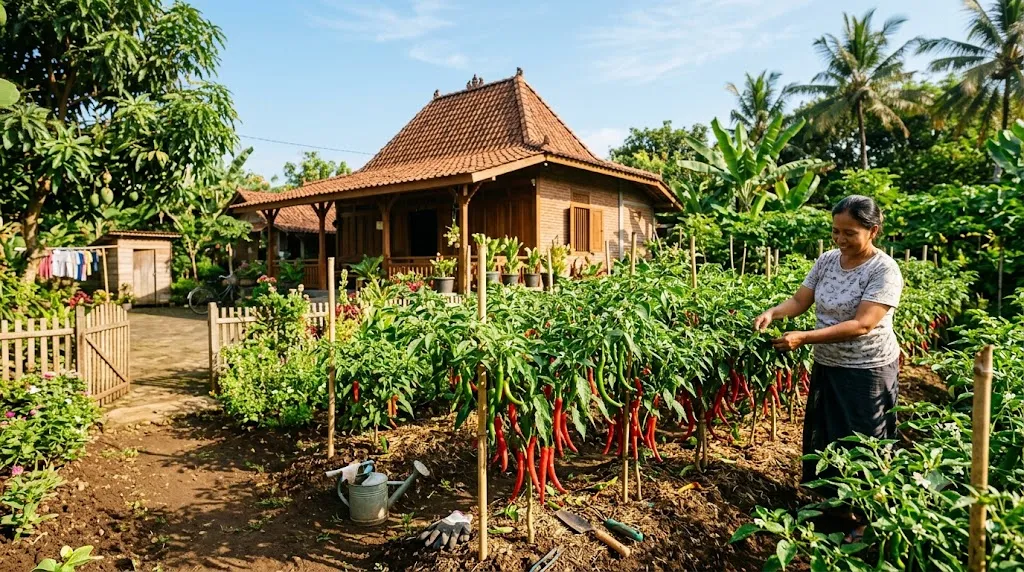
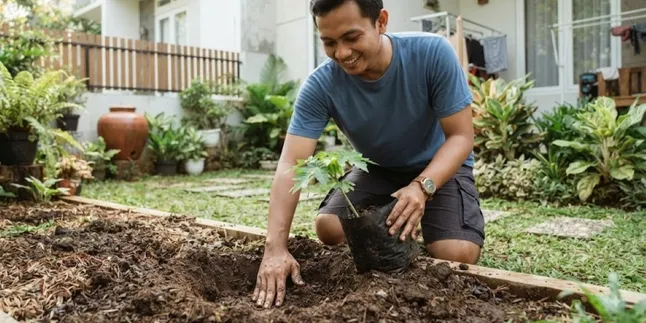
How to Fertilize Chili Plants (AI Generated)
Sunlight is one of the important needs for chili plants because light helps the process of photosynthesis which produces energy for growth. Plants that receive enough light usually have stronger stems and more balanced growth compared to plants that remain in the shade. Therefore, the way to fertilize chili plants should start by ensuring that the planting location receives adequate sunlight exposure every day.
Ideally, chili plants should receive about six to eight hours of direct sunlight, although this requirement may vary depending on environmental conditions and the variety being planted. If the chili is planted in a pot, place the plant in an area that is not blocked by walls, large trees, or buildings that allow sunlight to reach the plant for only a few hours. Adequate light exposure helps the plant have the energy to enter the flowering phase.
Conversely, a lack of light can cause the plant to grow too elongated with greater spacing between the stem nodes, while the number of flowers that appear is not proportional to its vegetative growth. Therefore, before adding fertilizer or other nutrient materials, first check whether the plant is already receiving enough light. Improving the growing location can sometimes make a more significant change than simply increasing the amount of fertilizer.
2. Use Fertilizers with Phosphorus and Potassium Content
When chili plants begin to enter the flowering phase, the need for nutrients should be considered so that the plants can support the development of flowers and fruits. Phosphorus plays a role in various plant growth processes, while potassium is related to many physiological processes that assist in plant development and the quality of the harvest. Therefore, the choice of fertilizer should be adjusted to the conditions and growth phase of the chili.
At the stage when the plants are large enough and begin to show signs of flowering, fertilizers with nutrient content that supports the generative phase can be used according to the instructions on the packaging. Do not assume that fertilizers with high concentrations automatically make plants produce fruit faster, as excess nutrients can disrupt the balance of the medium and potentially cause problems with the roots.
Fertilization should also be done periodically rather than giving a very large amount all at once. Pay attention to the condition of the plants after fertilization, including leaf color, bud growth, appearance of flowers, and condition of the growing medium. If the plants show abnormal growth, reevaluate the type, dosage, and frequency of the fertilizer used so that nutrient needs can be met more precisely.
3. Don't Give Too Much Nitrogen Fertilizer
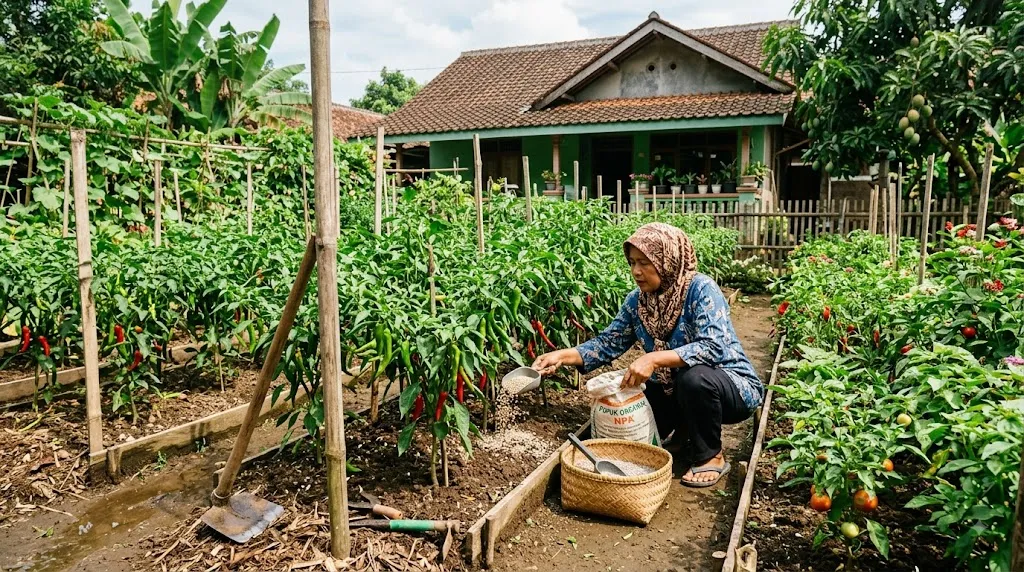
How to Fertilize Chili Plants (AI Generated)
Nitrogen is essential for plants to form leaves, stems, and other vegetative tissues, so this element continues to play an important role during the growth of chili peppers. However, excessive nitrogen application when the plants are supposed to begin the flowering phase can lead to overly dominant vegetative growth. This condition can make the plants look very lush, but the formation of flowers and fruits does not always follow the growth of the leaves.
Plants that receive too much nitrogen can show very active leaf and shoot growth, causing the plant's focus to be more on forming vegetative parts. Therefore, when the chili peppers are mature enough, nutrient application needs to be adjusted to the needs of the plant and not just aimed at making the leaves greener. The balance of nutrients becomes an important part of plant care aimed at producing fruit.
Plant owners also need to read the fertilizer contents before using it, especially if using several types of fertilizers at once. Avoid mixing various products without understanding the content of each, as the total nutrients received by the plants can become too high. Measured fertilization is actually safer to support the gradual growth of chili peppers and keep the plants productive over a longer period.
4. Water Regularly, but Avoid Waterlogging
The availability of water greatly affects the growth of chili plants because water is needed in various physiological processes and helps plants absorb and transport nutrients. Irregular watering can put stress on the plants, especially when the media is too dry for too long. Therefore, watering should be done considering the condition of the media, weather, size of the plants, and where the chili is planted.
Media that is too wet is also not an ideal condition because roots need air space to function properly. If water continues to pool around the roots, this condition can increase the risk of root disorders and make the plants more susceptible to growth problems. Chili pots should have sufficient drainage holes so that excess water can escape and not remain trapped in the media.
In the morning or evening, check the moisture of the media before deciding to water again, especially when the plants are in pots. During hot and dry weather, the water needs may increase, while in the rainy season, the frequency of watering may need to be reduced. This arrangement is an important part of how to fertilize chili plants because healthy roots will be better able to absorb available water and nutrients.
5. Add Organic Material to the Growing Medium
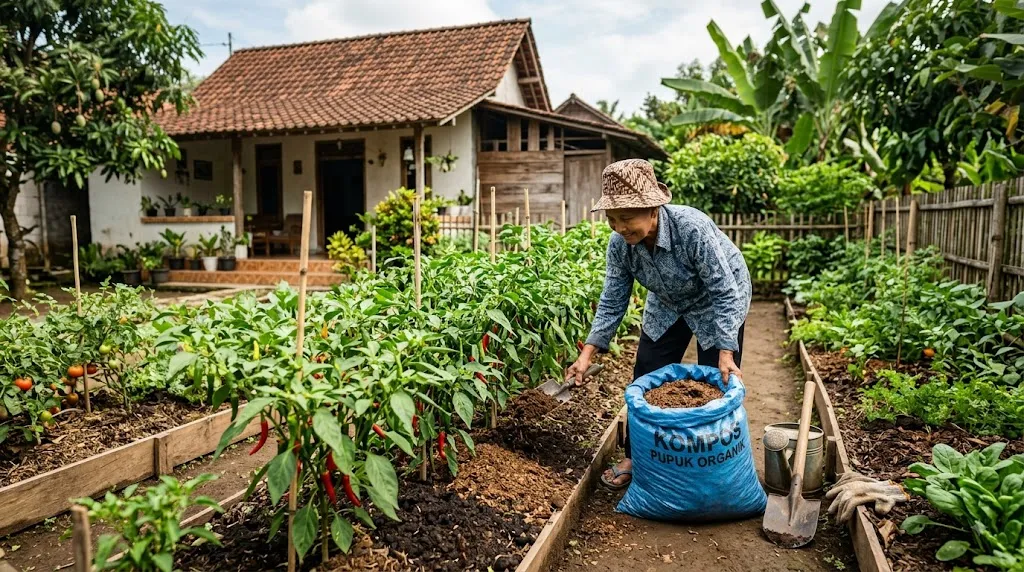
How to Fertilize Chili Plants (AI Generated)
A good growing medium helps roots develop more freely while providing conditions that support the absorption of water and nutrients. Mature compost or fermented manure can be used as a source of organic material to improve the condition of the medium. Organic material can also help make the soil looser so that roots do not grow in an overly compact environment.
For chili plants in pots, the medium can be made from a combination of soil, mature compost, and materials that help improve aeration and drainage, such as burnt rice husks. The ratio of materials should be adjusted according to the characteristics of the medium used so that the final result is not too compact or too prone to losing water. A balanced medium will help roots get water as well as air in more appropriate amounts.
Fresh manure should not be applied in large amounts directly around the roots of the plants because its decomposition process is not yet complete and its condition may not be suitable for the roots. Use organic material that is mature and has stable conditions, then apply it in moderation. Gradual improvement of the medium can help the plants grow stronger while supporting nutrient absorption during the formation of flowers and fruits.
6. Prune Unnecessary Parts
Pruning can help shape chili plants so they are not too bushy and provide space for air circulation among the leaves and branches. Damaged, sick, or irregularly growing parts can be inspected and pruned if they disturb the condition of the plant. With a more organized plant structure, light can also reach parts of the plant more evenly.
However, pruning does not mean that all leaves or shoots must be cut off for the plant to bear fruit quickly. Leaves are an important part that plants use to perform photosynthesis, so excessive pruning can actually reduce the plant's ability to produce energy. Choose parts that really need to be removed and perform pruning using clean tools to minimize the risk of spreading issues from one part of the plant to another.
Pruning should also be done with consideration of the plant's condition, not just following the same rules for all chili plants. Plants that are weak, under pest attack, or have recently experienced stress due to environmental changes should not be aggressively pruned right away. Gradual and proportional care will help the plant maintain the necessary leaves while also forming more orderly branching.
7. Help the Pollination Process
Once the flowers start to appear, attention should no longer be solely focused on the growth of leaves and branches because the flowers need to develop into fruits for the plants to yield a harvest. The pollination process becomes one of the important stages in fruit formation, so the environmental conditions around the plants need to be maintained to support natural pollination activities. Plants with many flowers do not necessarily produce many fruits if many flowers fail to develop.
If chili is planted in an area with minimal insect activity or less supportive environmental conditions, pollination can be assisted manually. One simple method is to gently shake the plants to transfer the pollen, or use a clean small brush to help move the pollen from the flower parts. This method can be done carefully without damaging the flowers that are still developing.
Avoid touching or shaking the flowers roughly because young flowers are quite vulnerable to damage. Also, pay attention to the environmental conditions when the plants are flowering, especially if there are extreme weather changes. By keeping the plants healthy and providing stable growing conditions, the chances for the flowers to survive and develop into fruits can be better maintained so that the harvest does not solely depend on the number of flowers that appear.
8. Pay Attention to Pests and Diseases
Chili plants that receive adequate nutrition can still experience problems if attacked by pests or diseases. Aphids, thrips, mites, and various other disturbances can attack the leaves, shoots, flowers, or fruits, disrupting the growth of the plants. Regular inspections are one simple step that can be taken to identify issues early before damage spreads to other parts of the plant.
Check the undersides of leaves, young shoots, stems, and areas around flowers periodically because some pests are small and not always easy to see from a distance. Changes such as curling leaves, color changes on leaf surfaces, stunted shoot growth, or falling flowers can be signs that the plant is experiencing disturbances. The sooner the cause is identified, the easier it is to determine the appropriate handling steps.
Do not immediately apply various control materials simultaneously without knowing the cause of the problem, as inappropriate actions can add stress to the plants. If possible, separate plants showing severe symptoms and clean up damaged parts as needed. Maintaining cleanliness in the planting area, air circulation, drainage, and the overall condition of the plants is an important part of how to nourish chili plants so they can sustain growth until they produce fruit.
9. Questions and Answers About How to Fertilize Chili Plants
1. What makes chili plants bloom quickly?
Sufficient sunlight, balanced nutrients, regular watering, and healthy root conditions can support the plant in entering the flowering phase.
2. Is nitrogen fertilizer good for chili plants?
Nitrogen is still needed, but its application needs to be adjusted because excess nitrogen can lead to more dominant leaf growth than flower formation.
3. Why do chili flowers often drop?
Flowers can drop for various reasons, such as unsuitable environmental conditions, pest disturbances, water issues, or the plant experiencing stress.
4. How long does it take for chili plants to start producing fruit?
The time varies according to the variety and growth conditions, but fruit usually starts to form after the plant passes the flowering and pollination stages.
5. Can potted chili plants produce a lot of fruit?
Yes, as long as the pot size is adequate, the medium has good drainage, the plant receives enough light, and its water and nutrient needs are met in a balanced manner.
(kpl/ank)
Disclaimer: This translation from Bahasa Indonesia to English has been generated by Artificial Intelligence.


 Follow
 Rekomendasi