

 Follow
 Rekomendasi
How to Plant Cassava Leaves for Abundant Shoots for a Higher Harvest
How to plant cassava leaves for abundant shoots helps the plant produce more buds without interfering with tuber formation.

Kapanlagi.com - The katuk plant (Sauropus androgynus) is widely known in Indonesia as an indigenous vegetable rich in benefits, one of which is to smooth the production of breast milk. In addition, katuk leaves can also be used as vegetables, side dishes, and even natural dyes. To obtain katuk plants that are diligent in budding and have lush leaves, a series of proper and planned cultivation steps are required.
Cultivating katuk is not too difficult and can even be done in the yard of your home. This plant easily adapts and can grow well in both lowland and highland areas. By applying the right methods, you can have a sustainable supply of fresh katuk leaves. Below will be explained how to plant katuk to encourage budding, as reported by KapanLagi.com from various sources, Tuesday (4/8/2026).
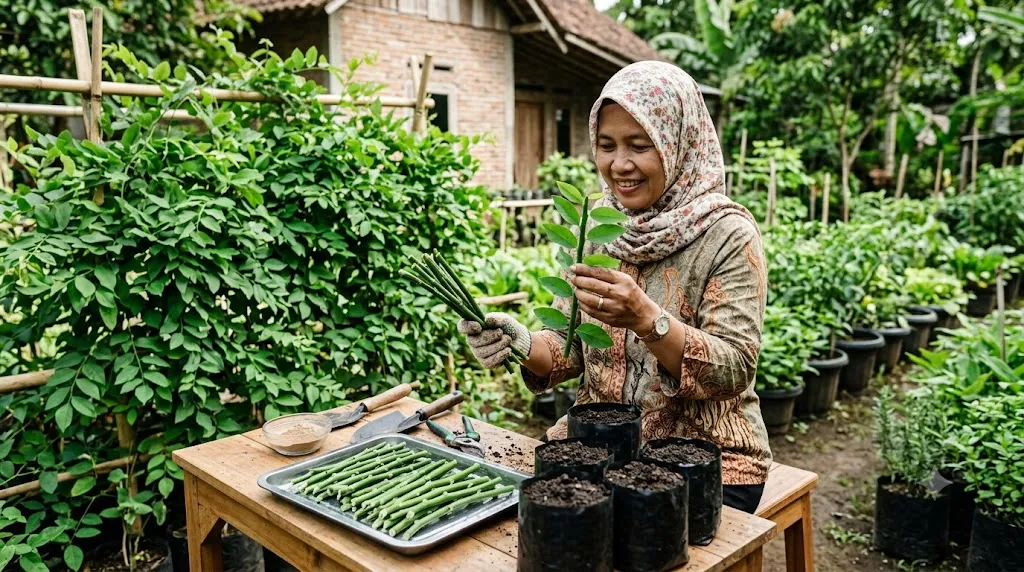
Illustration of How to Plant Katuk for Frequent Sprouting/AI Generated
The first step in planting katuk to encourage vigorous sprouting is selecting the right cuttings. The easiest and most effective way to propagate katuk plants is through stem cuttings. This method allows the plants to sprout and leaf out faster compared to seeds, so the plants can be harvested in the short term.
The easiest way to cultivate katuk plants (Sauropus androgynus) is through planting stem cuttings. This is because the plants sprout and leaf out more easily, allowing for harvesting in the short term.
Choose cuttings from healthy, fresh parent plants that are free from pests and diseases. Ideally, the parent stems used for cuttings should be around 6 to 12 months old, or at least 10 months or older for optimal growth. To increase the success of rooting, stem cuttings can be soaked in a fungicide solution and root-inducing hormone before planting.
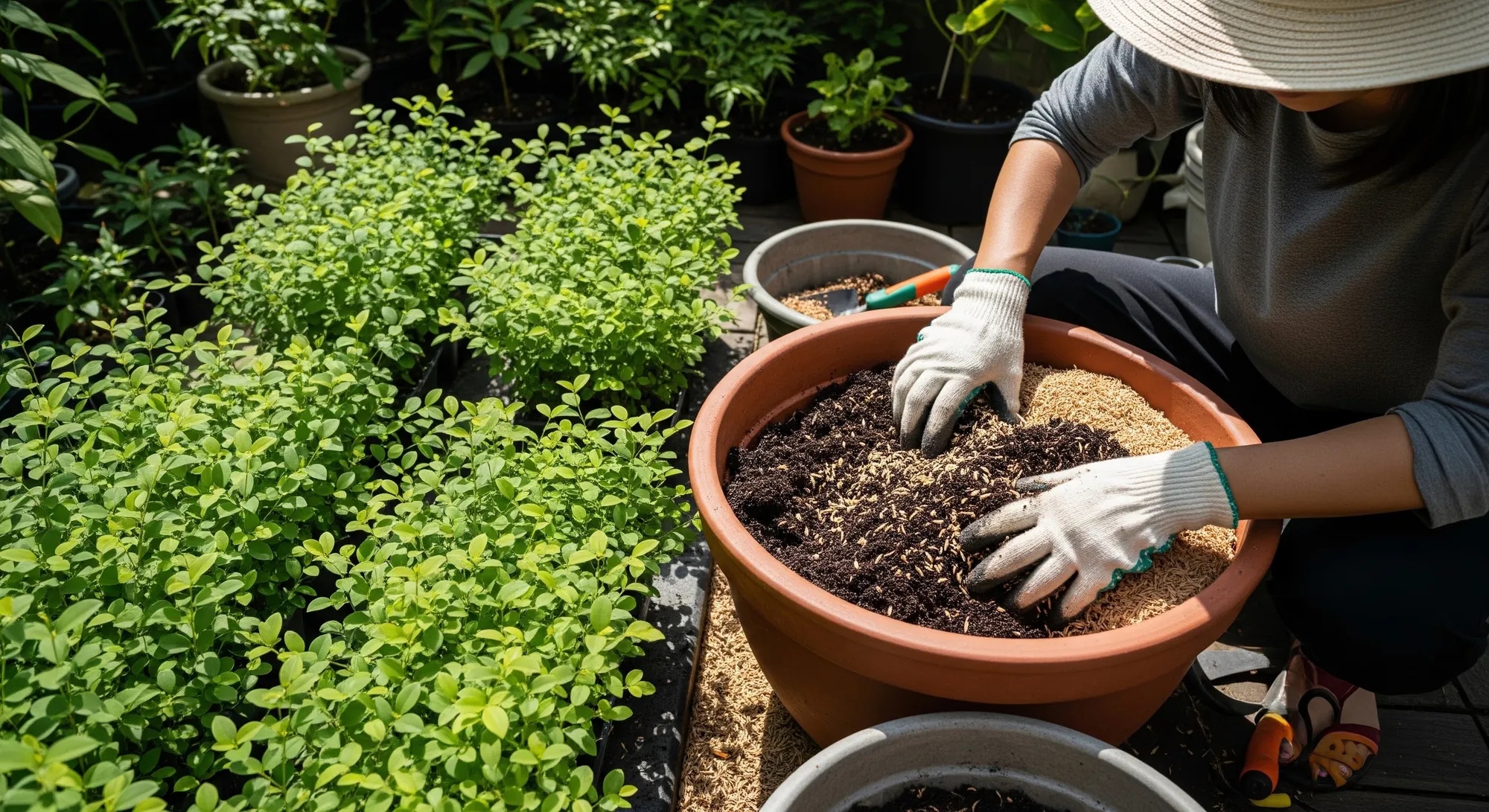
Illustration on How to Plant Katuk for Frequent Sprouting/AI Generated
Fertile and suitable planting media is very important to support the growth of katuk plants that frequently sprout. Katuk plants grow optimally in fertile, loose soil that contains a lot of humus, has good aeration and drainage, and a pH between 5.5 and 6.5.
The most ideal environmental conditions for katuk growth are areas with temperatures between 21 to 30 degrees Celsius and humidity between 50 to 80 percent. Although katuk is tolerant of various types of soil and can grow in open land, ideal soil conditions will optimize its growth.
If planting in raised beds, prepare the land and create beds that are 100-120 cm wide, 30 cm high, and have a distance of 30-40 cm between beds. Add 20 tons/ha of manure to the beds, or 30 tons/ha before planting. Ensure that the soil structure is not hard and compact to prevent cuttings from breaking during planting.
For planting in pots or polybags, use a mixture of rice husk, red soil, and manure. Katuk also prefers shade conditions of about 20-30%, which can enhance the growth of shoots and leaves.
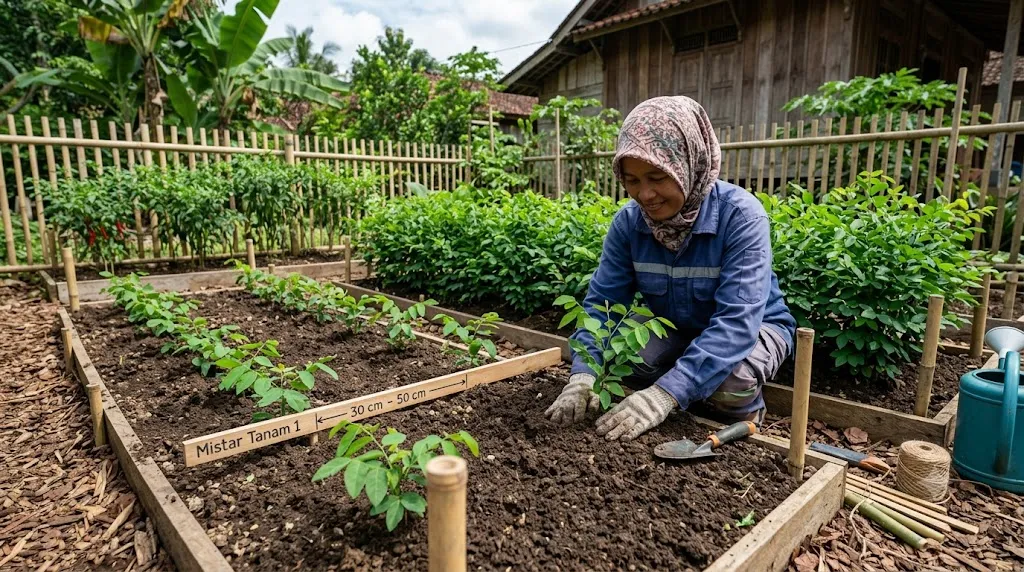
Illustration of How to Plant Katuk for Frequent Sprouting/AI Generated
After land preparation, the next step in how to plant katuk for frequent sprouting is the correct planting technique. Katuk stem cuttings can be directly inserted into the planting holes. Insert the cutting seedlings 4-6 cm deep with the buds facing upwards, or about 10-15 cm. The method of planting katuk is simply by inserting the seedlings into the planting holes. Then, cover the planting holes with soil and water until moist.
After the cuttings are inserted, cover the planting holes with soil and water until moist. The ideal planting distance varies, ranging from 20x20 cm, 30x30 cm, to 50-70 cm, depending on the planting system (beds or fences). Planting should preferably be done in the afternoon to avoid direct sunlight. If using seedlings from polybags, transfer the seedlings that have started to sprout to the prepared planting area.
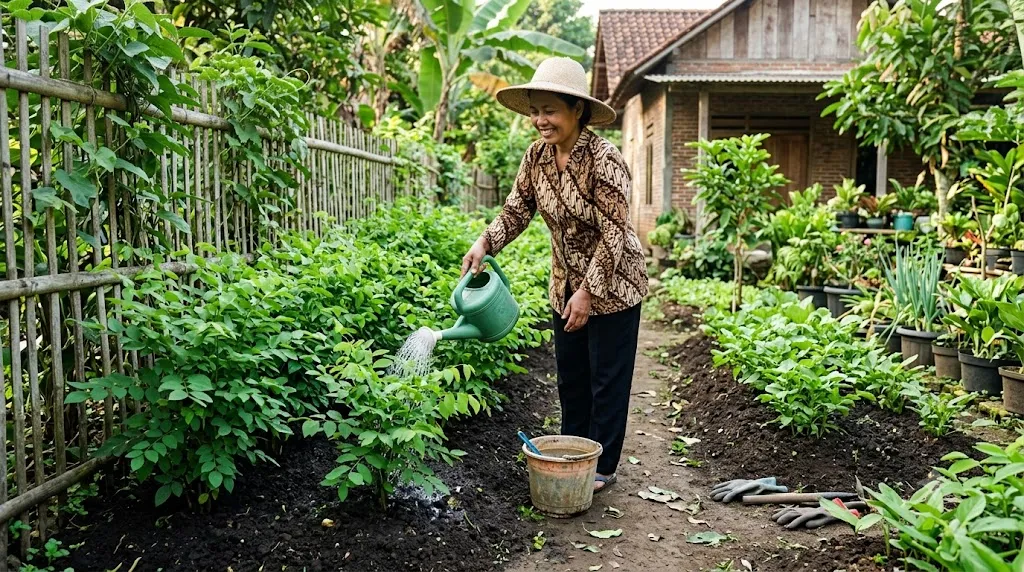
Illustration of How to Plant Katuk to Encourage Budding/AI Generated
Regular watering and fertilizing are key to planting katuk for frequent sprouting. Katuk plants are very responsive to fertilization, so regular application of fertilizer will help the plants grow lush. This plant is very responsive to fertilization; therefore, provide fertilizer regularly for the plants to thrive.”
Water the plants regularly, at least twice a week, or every morning and evening, adjusted to the soil moisture conditions. The first two months after planting, regular watering is crucial for good sprout growth. Liquid organic fertilizer (POC) can also be used to accelerate plant fertility.
The types of fertilizers needed include Urea and KCl. Additionally, organic fertilizers such as manure, compost, or cow urine are highly recommended, as they can improve soil structure and nutrient availability. Additional fertilization can be done in the 4th, 6th, and 8th weeks after planting, then every 3-4 weeks with manure (10-15 tons/ha) or urea (5 grams per plant).
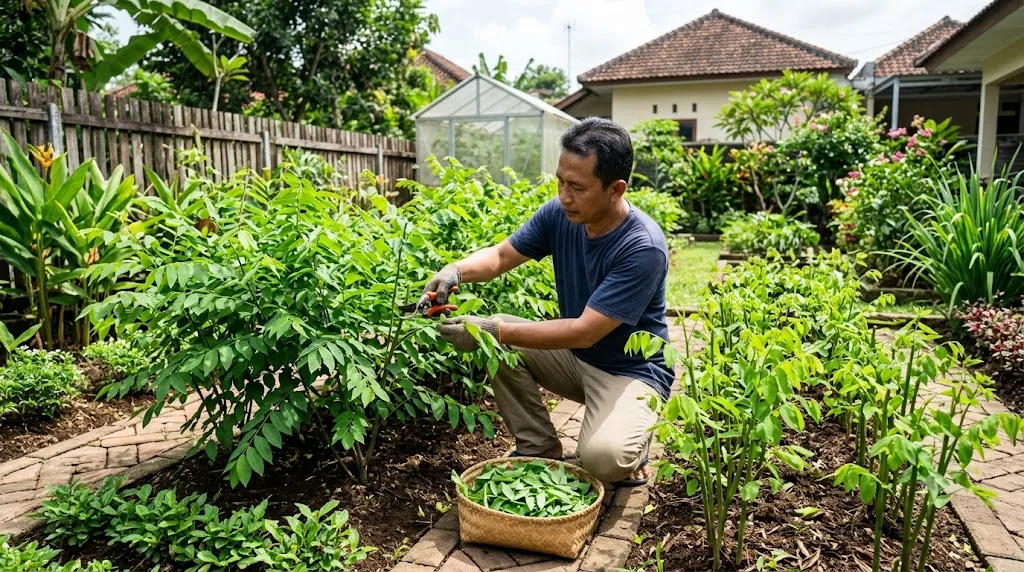
Illustration of How to Plant Katuk for Regular Sprouting/AI Generated
Pruning is one of the most important aspects of how to plant katuk to encourage budding. Regular pruning will stimulate the growth of new shoots and keep the plant lush.
The ideal harvesting can be done when the leaves are still young and fresh. This is done because young leaves have a better taste and are more nutritious. Regular pruning also prevents the plant from growing too tall and makes the harvesting process easier.
When harvesting, cut the tips of the young shoots about 7 cm from the base of the newly grown leaves. Pruning of unproductive shoots should also be done periodically. After pruning, new shoots will start to develop every two weeks. It is important to leave a plant height of about 50-60 cm after pruning or harvesting so that the plant can continue to produce fresh young leaves.
In addition to pruning, weeding should be done at 15 days after planting or every two weeks. Soil hilling is also important to strengthen plant growth. Pest and disease control, such as thrips, whiteflies, caterpillars, and grasshoppers, should also be carried out manually or with appropriate pesticides. The first harvest can be done 2-3 months after planting, and subsequent harvests every 30-60 days, ideally in the morning or evening.
What is the most effective propagation method for katuk to encourage regular sprouting?
Propagation by stem cuttings is the most effective because the plants sprout and leaf more easily.
What are the ideal soil conditions for katuk plants?
Fertile, loose soil rich in humus, with good aeration and drainage, and a pH of 5.5-6.5 are the ideal conditions for katuk plants.
How often should katuk plants be watered and fertilized?
Katuk plants need to be watered at least twice a week or daily depending on soil moisture, and fertilized regularly as they are very responsive to fertilization.
Why is pruning important for katuk?
Pruning stimulates the growth of new shoots, keeps the plants bushy, and ensures a continuous production of young leaves.
When is the best time to harvest katuk leaves?
The first harvest can be done 2-3 months after planting, and subsequent harvests every 30-60 days, ideally in the morning or evening.
(kpl/nti)
Cobain For You Page (FYP) Yang kamu suka ada di sini,
lihat isinya
How to plant cassava leaves for abundant shoots helps the plant produce more buds without interfering with tuber formation.

Learn how to clean marble floors without wearing them down to keep them clean, shiny, and durable.
How to make cacti reproduce quickly with the right care so they grow healthy and produce many offsets.

Inspiration for house facades with yellow palms that make the residence look cooler, greener, and more elegant in various design styles.

Check out the plants that make your home more private while being beautiful to look at, from Japanese bamboo to tea plants.
Create a mini garden at home by planting starfruit in used gallon containers. Follow the complete guide from seed selection to care for abundant fruit throughout the year.

For those of you who can't wait to feel warm and fuzzy and smile to yourselves, just check out the following romantic anime recommendations. From IJIRANAIDE, NAGATORO-SAN to KIMI NO NAWA, you can choose according to your taste.

Experience the freshness and health benefits with 7 herbal recipes for lowering cholesterol that can be enjoyed cold! Each recipe offers a combination of natural ingredients that are not only refreshing but also help keep your cholesterol levels balanced. Get ready to enjoy delicious and beneficial healthy drinks!

Pineapple juice is not only refreshing but also beneficial for lowering cholesterol! However, for optimal results, continue to support it with a healthy lifestyle.

What if a single pill or serum could change a person's destiny in a matter of seconds? This concept serves as the backdrop for various top science fiction films. Here are the recommendations for you, KLovers.

From legendary wizards to worlds filled with mystical creatures, this genre offers thrilling storylines. Here are the recommendations for you, KLovers.

On the day of Eid al-Fitr, sending Eid words with touching messages can be sent to family, friends, or colleagues. Here are references for Eid words 2025.
