

 Follow
 Rekomendasi
7 Ways to Transform an Old Kitchen into a More Modern One Without Major Renovations
Want to update your kitchen without a big budget? Check out seven ways to renovate an old kitchen to look modern, tidy, and still budget-friendly.

Kapanlagi.com - Letters remain one of the forms of written communication used for various needs, ranging from personal matters, education, business, to government administration. Although digital communication is increasingly developing, the existence of letters has not been replaced because they have documentary value and can serve as written evidence in various official interests.
Understanding types of letters is an important foundation so that every message can be conveyed in the appropriate format. Each letter has different characteristics, functions, and language usage depending on who the letter is addressed to and what its purpose is. By knowing the differences, one can choose a more effective form of correspondence while remaining professional.
In practice, letters do not only function as a medium for conveying information. Letters are also used as archives, work guidelines, and documents that have legal power in certain situations. Therefore, understanding the classification of letters along with their writing structure is still relevant even though communication is predominantly digital.
A letter is a written communication medium sent from one party to another through certain media to convey information, requests, notifications, or various other interests. In a more specific sense, a letter can be in the form of handwritten text or printed material that serves as a means of formal or informal communication.
Referring to the book Indonesian Language for Higher Education by Nurdjan et al. (2016), a letter is a communication tool used to convey written information from the sender to the recipient with the aim of clearly expressing a specific intention.
The content of a letter can be very diverse. It can contain notifications, tasks, requests, orders, reports, agreements, commands, reprimands, awards, and even cover letters according to the sender's needs.
In various fields of work, letters are still maintained because they have functions that cannot always be replaced by instant messages. Written correspondence provides clearer documentation, making it easier to trace back if needed in the future.
In addition to being a means of conveying information, letters also have several important functions, including serving as written evidence, a reminder through archives, historical evidence, and guidelines for carrying out work within an organization or agency.
In a professional environment, business letters are still used to build more formal communication. Well-prepared documents can demonstrate professionalism while also enhancing trust between companies, business partners, and customers.
One of the most common ways to recognize types of letters is by looking at the content and the importance behind their creation. Each category has its own characteristics, ranging from language use, writing format, to the parties that are the recipients of the letters.
In general, letters can be formal or informal. This distinction affects the arrangement of the document, language choices, and the administrative completeness that must be included so that the letter can be used according to needs.
Furthermore, each type of letter is designed to fulfill a specific function. Some letters are created for personal interests, while others are used as official documents within government, organizations, or the business world.
Personal letters are used for personal interests and are generally addressed to family, friends, or relatives. This type of letter is not bound by standardized writing rules, allowing the writer more freedom to use casual language according to their relationship with the recipient.
Informal or personal letters are usually used to share news, convey stories, or maintain communication with close people. Because of their unofficial nature, there are no specific regulations regarding the format or arrangement of the letter that must be followed.
Unlike personal letters, official letters are used for the administrative purposes of a government agency or company. This document addresses official matters, so all its components must comply with applicable regulations.
Official letters generally contain a letterhead, letter number, stamp, and use standard Indonesian language. All these elements become the official identity that distinguishes it from informal letters.
In the business world, written communication is often conducted through commercial letters. This document is used to support various trading activities and business collaborations.
It can take the form of offer letters, order letters, invoices, receipts, billing letters, and even customer complaint letters. All of them are drafted formally so that every transaction and agreement has clear documentation.
Business letters also serve as an official communication medium between companies, organizations, and stakeholders. In addition to documenting requests and agreements, this letter helps build professional relationships among parties.
An official letter is used for formal purposes, whether by individuals, institutions, organizations, or agencies. The use of standard language is one of the main characteristics that is always maintained in this type of letter.
Besides having a systematic format, official letters are usually equipped with a letterhead, letter number, signature of the authorized official, and a stamp as a form of document validation.
A job application letter is a document prepared by applicants when applying to a specific company or agency. Although created individually, this letter is still considered an official letter because it follows formal writing standards.
The preparation of a job application letter must pay attention to grammar, structure, and the information conveyed to provide a professional picture of the applicant's identity and qualifications.
The next type of letter is a social letter, which is related to community activities and social relationships among people.
Examples include invitation letters for social events, letters of thanks, and condolence letters. Although not always used in business or government matters, social letters still prioritize the delivery of messages that are polite and appropriate to their purpose.
In addition to being distinguished by content, types of letters can also be recognized by their purpose of creation. Each letter is composed to meet specific needs, so the content, format, and recipient also adjust to the function that is intended to be achieved.
In both government and corporate environments, this classification facilitates the administrative process because each document has a different role. There are letters that contain requests, official decisions, and even the delegation of authority to other parties.
On the other hand, some letters are also classified based on the level of confidentiality and how quickly the document must be followed up. This classification is widely applied in government agencies and large-scale organizations.
A letter of request is used when an individual or institution wants to submit a request to another party. Its form can be a request for permission, funding assistance, or other administrative needs that require approval.
A decision letter contains an official determination from the leadership regarding a policy, such as the appointment of employees, the establishment of a committee, or organizational decisions. Because of its official nature, this letter serves as the basis for implementing a policy.
Meanwhile, a power of attorney is created to grant authority to another person to act on behalf of the grantor. In legal terms, a general power of attorney is recognized as regulated in Article 1796 of the Civil Code, as well as a special power of attorney regulated in Article 1795 of the Civil Code.
Another type is an order letter that contains instructions from a superior to a subordinate to carry out specific tasks, such as official travel or special work within an agency.
A cover letter serves to accompany documents, goods, or other administrative needs so that the recipient receives an explanation regarding the files that are sent.
Additionally, there is a circular letter that contains information or instructions regarding the implementation of a policy to many parties at once. This letter is commonly used by schools, educational institutions, and government agencies.
An invitation letter is used to invite someone or a group to attend an event, whether it is a meeting, an official event, or a non-formal activity according to the organizer's needs.
There is also a warning letter given to subordinates or employees when a disciplinary violation occurs. Generally, this letter is issued gradually according to the level of violation committed.
Meanwhile, a recommendation letter contains an assessment or positive information about someone to obtain favorable consideration from others. In business practice, there is also an acknowledgment letter used to state that a communication or request has been received even though a final decision has not yet been made.
In official administration, the content of letters is also differentiated based on the level of information security. This classification determines who is entitled to read and access the document.
Highly Confidential Letter (SRHS/SR) may only be known by parties with very limited authority. Below that is the Confidential Letter (R/RHS) which can only be accessed by authorized recipients.
Furthermore, there is a Restricted Letter whose distribution is limited to certain environments, and a Regular Letter which contains general information without any confidentiality elements.
Not all letters require handling with the same level of urgency. Therefore, letters are also differentiated based on their resolution priority.
Urgent or Very Urgent Letters are documents that must be processed and sent as quickly as possible. After that, there are Immediate Letters that still require faster handling compared to regular letters.
Regular Letters are used for documents that do not require special priority, so they can be processed according to the applicable administrative flow.
In terms of their scope of use, letters are divided into internal letters and external letters. Internal letters are used within the same organization, for example, between departments, divisions, or branches of a company. Conversely, external letters are addressed to parties outside the organization, such as customers, business partners, or other institutions.
The existence of letters not only serves as a medium for conveying information. To this day, various educational institutions, companies, and government agencies still utilize them as official documents that have administrative and documentation value.
Through well-structured letters, information can be conveyed clearly and also documented for future needs. Therefore, understanding the function of letters along with their writing structure becomes important before creating correspondence.
In addition to adjusting the type of letter used, the preparation of each part must also be done correctly so that the content of the letter is easily understood by the recipient.
One of the main functions of a letter is as a formal communication tool between two or more parties. Various important information can be conveyed through letters in writing, making it easier to hold accountable compared to verbal communication.
Letters also serve as written evidence. In various legal and administrative matters, this document can serve as a basis for proof, for example, for notifications of termination of employment, compliance issues, or the resolution of certain disputes. Even when sent via email, the content of the letter still needs to use formal and clear language.
Another function is as an archive and a reminder tool. Well-documented letters can serve as references when the same information is needed again in the future.
In the workplace, decision letters, assignment letters, and instruction letters also serve as guidelines for carrying out work. The document provides guidance on tasks, responsibilities, and policies that must be implemented.
Some letters serve as security guarantees, such as letters of assignment or letters of transportation that serve as official proof that someone is carrying out work on behalf of a particular agency.
Meanwhile, in the business world, offer letters remain one of the most widely used promotional media. Compared to mass messages that are general in nature, offer letters can be crafted in a more personal manner, helping companies introduce products or services to potential customers.
Every official letter has a relatively standard format so that information is conveyed systematically. The first part begins with the letterhead containing the agency's identity, such as name, logo, address, and contact information.
Next, the date of the letter's creation, the letter number as an administrative identity, as well as attachments and the subject explaining the main discussion of the document are included.
The next section contains the recipient's address, the opening salutation, the body of the letter consisting of an opening paragraph, the main discussion, and a closing, followed by a closing salutation, the signature along with the name of the authorized official, and copies if necessary.
Unlike official letters, the structure of personal letters is much simpler. Generally, it only consists of the place and date of writing, the opening salutation, the body of the letter, the closing, and the name or signature of the sender without having to follow a specific administrative format.
In addition to paying attention to the content, the layout of the letter also has several formats commonly used in business or administrative correspondence.
One of them is the full block style, which is a format that aligns all parts of the letter from the left margin. There is also a modified block style that places the date, closing salutation, and signature in the center of the horizontal page.
In Indonesia, several forms that are still frequently used include the full block style, block style, semi block style, indented style, and official style.
The choice of letter type should be adjusted to the recipient, the purpose of sending, and the level of formality required. For official and business needs, an official letter with a standard structure is the right choice. Meanwhile, for communication among family or relatives, a more flexible personal letter can be used as long as the content of the message remains clear and easy to understand.
(kpl/mda)
Cobain For You Page (FYP) Yang kamu suka ada di sini,
lihat isinya
Want to update your kitchen without a big budget? Check out seven ways to renovate an old kitchen to look modern, tidy, and still budget-friendly.

The Exiled Heavy Knight Knows How to Game the System Hero officially premieres today. This fantasy anime tells the story of the "failed class" that turns out to be the strongest.

It has been three years since it was announced, this latest anime film from MAPPA studio still does not have an official release schedule, leaving fans curious.

The umrah worship that Ruben Onsu is currently undergoing is colored by extreme weather challenges. Read more about it here...
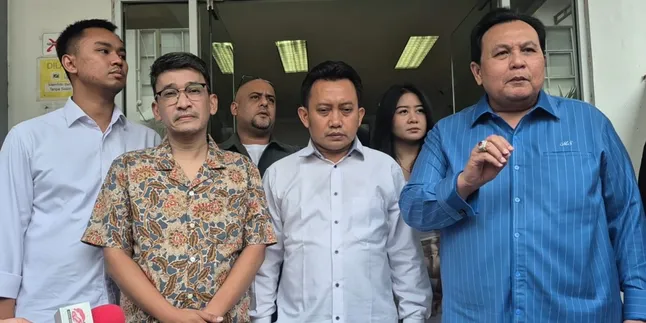
The South Jakarta District Court confirmed that the custody lawsuit hearing filed by Ruben Onsu against Sarwendah will be held behind closed doors.

The civil lawsuit filed by the family of Lexi Valleno Havlenda against Tarumanagara University (Untar) originated from the failure of the mediation process between both parties. Read more about it here...

The planned meeting between Ruben Onsu and Sarwendah on July 11 is confirmed cancelled after the child custody lawsuit was filed in the South Jakarta District Court.

Sarwendah's side stated that they are ready to face the child custody lawsuit from Ruben Onsu. They plan to reveal several facts that have never been disclosed to the public.
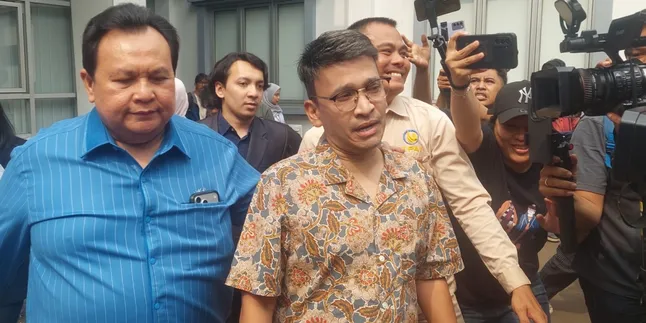
Ruben Onsu is suing for child custody at the South Jakarta District Court. One of his reasons is that he claims to have difficulty meeting his children. Read more.

This series of Chinese dramas features stories of regret, betrayal, and inner conflict with strong plots and complex characters in each tale. Check out the list.

Dea Annisa held a golf-themed bridal shower with three of her friends. The moment took place after a wedding book photo session ahead of her wedding with Mazaki Ahmad. Read more about it here...

Kitchen and wash area designs using natural stone materials provide high durability while offering an aesthetic appearance for various modern home styles. Check out the inspiration.
