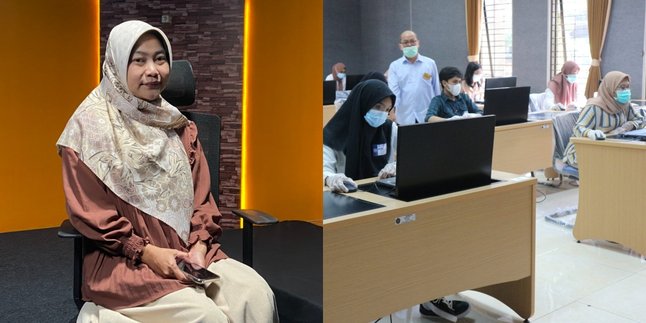
Kapanlagi.com - The research titled 'Students Reading Comprehension of English Textual Literacy Among Zillenial Generation' conducted by Yeni Rahmawati, Khusnul Khatimah, Dzul Rachman, and Sunarti, as lecturers of the English Education Study Program at Muhammadiyah University of East Kalimantan (UMKT), starts from the reality that learning to read in English remains a challenge for many students. In an interview, Yeni explained that reading English texts, whether through reading aloud or reading for comprehension, is not as easy as reading Indonesian texts.
This situation has led to many studies examining students' reading comprehension levels and the effectiveness of reading strategies. However, according to Yeni, research specifically depicting the actual reading comprehension conditions of Generation Z is still very limited. This generation is required to have a high level of literacy as most are still in secondary education.
"Therefore, descriptive research that illustrates their reading abilities is important to conduct," she stated.
This research also aims to understand the factors influencing students' reading comprehension levels. The researchers highlight the rapid development of technology, including artificial intelligence, which provides easy access to information while also posing new challenges. This ease has the potential to shape habits of obtaining information instantly.
"This condition may lead some students to prefer practical methods rather than exploring information through in-depth reading," Yeni explained.
1. Research Results

Muhammadiyah University of East Kalimantan / partnership
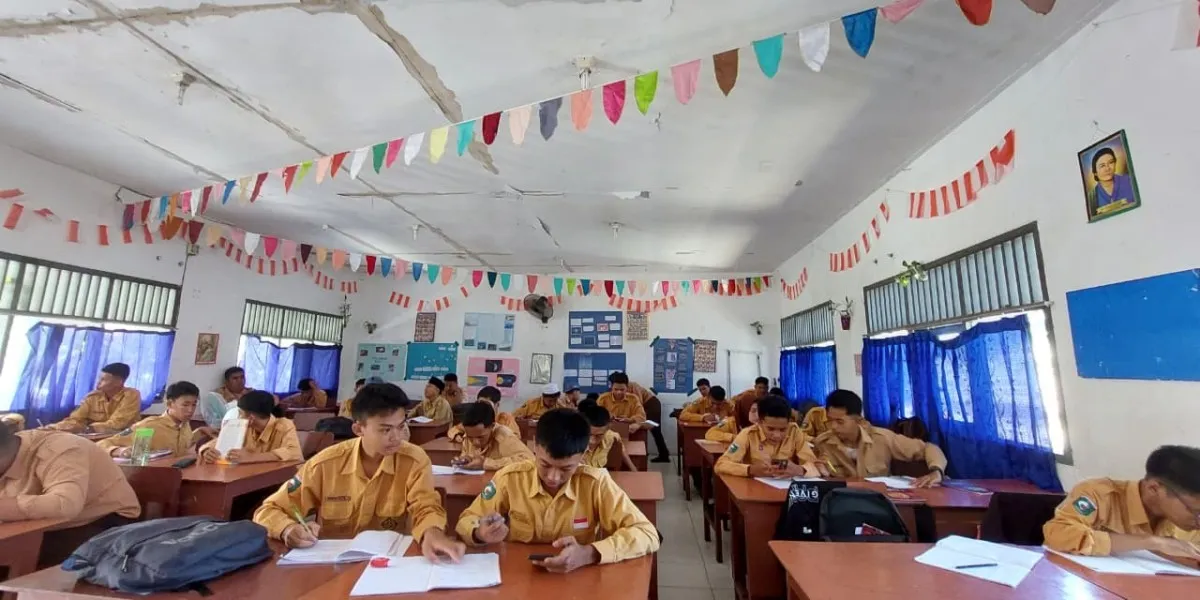
The research results show that students possess textual literacy in English, but their level of understanding is still low. The English literacy skills of Generation Z, in general, have not developed optimally. Students tend to struggle to understand and interpret information from English texts, especially those with medium to high levels of difficulty. Understanding implicit meanings, complex main ideas, and information that requires deep reasoning remains a major obstacle.
The researchers emphasize that these findings align with international studies such as PISA, which indicate that the reading literacy level of Indonesian students is still classified as low. These findings reinforce the urgency of improving reading literacy skills, particularly in textual English literacy.
"This effort requires the involvement of various parties, ranging from schools, educators, parents, to the wise use of technology," they said.
For teachers, lecturers, and education practitioners, this research provides a real picture of the gap between the demands of 21st-century literacy and the actual abilities of students. The researchers stress the importance of applying appropriate strategies, methods, and learning techniques. Simple efforts such as optimizing reading corners by providing texts that match students' abilities and interests, as well as involving parents in building a reading culture at home, can be an effective first step.
At the higher education level, these findings also highlight the need for refreshing innovative and contextual reading teaching methods. Variative, interactive, and relevant reading strategies to students' lives are expected to enhance reading interest.
"The reading process should not be viewed as a burden, but rather as a means to develop thinking skills, thus the learning approach needs to shift from merely being result-oriented to a process that fosters critical, inferential, and reflective thinking abilities," the researcher explained.
As a conclusion, Yeni, representing the researchers, emphasized that technological advancement does not automatically guarantee improved reading literacy skills. Reading needs to be understood as a habit and a thinking process that is built consciously, consistently, and collaboratively.
"This research invites educators, parents, and education stakeholders to cultivate a deep and sustainable reading culture, by wisely utilizing technology as a support, not a substitute for the literacy process," she concluded.
(kpl/jje)
Disclaimer: This translation from Bahasa Indonesia to English has been generated by Artificial Intelligence.

 Follow
 Rekomendasi