

 Follow
 Rekomendasi
10 Tricks to Organize Kitchen Drawers So They Don't Get Messy Every Day, Keep Them Neat All the Time
These tricks for organizing kitchen drawers help keep cooking utensils from getting messy and make them easier to find.
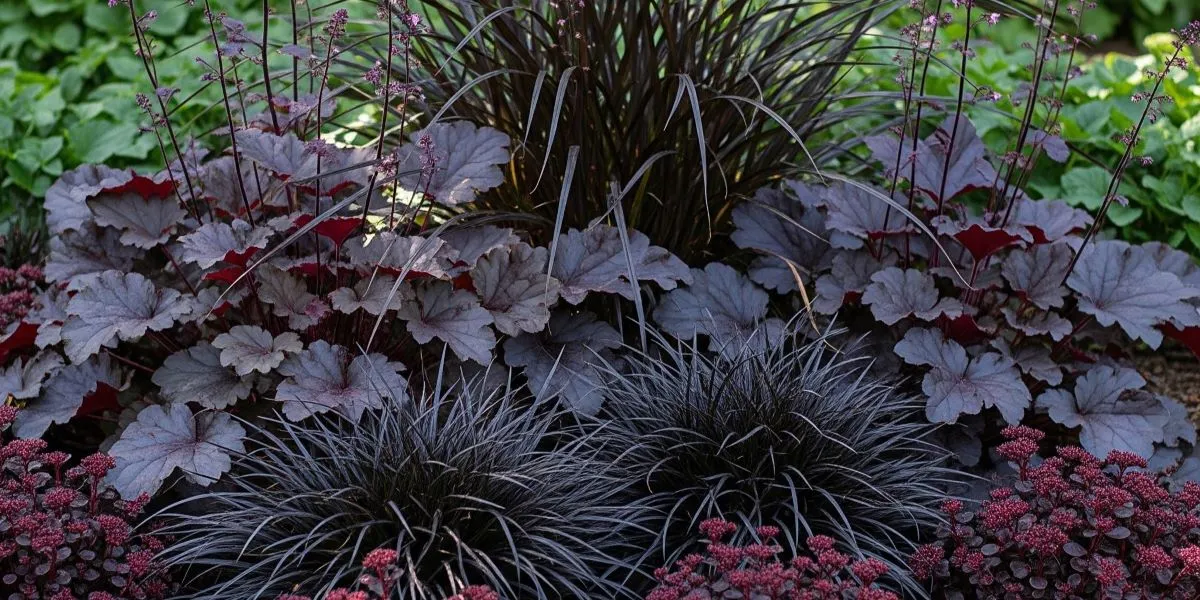
Kapanlagi.com - So far, home gardens are synonymous with the dominance of green colors that give a fresh and natural impression. However, if the entire garden area is filled only with plants that have similar leaf colors, the appearance can sometimes feel monotonous. To create a more characterful atmosphere, you can add plants with dark leaf colors such as deep purple, maroon, dark brown, and even nearly black. These colors can provide an interesting contrast while making the surrounding green plants stand out even more.
Dark-colored plants can also serve as decorative elements that make the garden feel more elegant and dramatic without having to add many ornaments. When placed among green-leaved plants or combined with elements such as natural stones, neutral-colored pots, wood, or light-colored walls, dark plants can become a focal point that attracts attention. In fact, some types can be planted in pots and placed on terraces, so they do not always require a large yard.
However, each plant has different needs for light, water, planting media, and care. Dark leaf colors do not always mean that the plants require special treatment, so their selection still needs to be adjusted to the conditions of the garden at home. So what dark-colored plants can make a garden look more elegant? Quoting from various sources, Thursday (8/13/2026), check out the information review below.
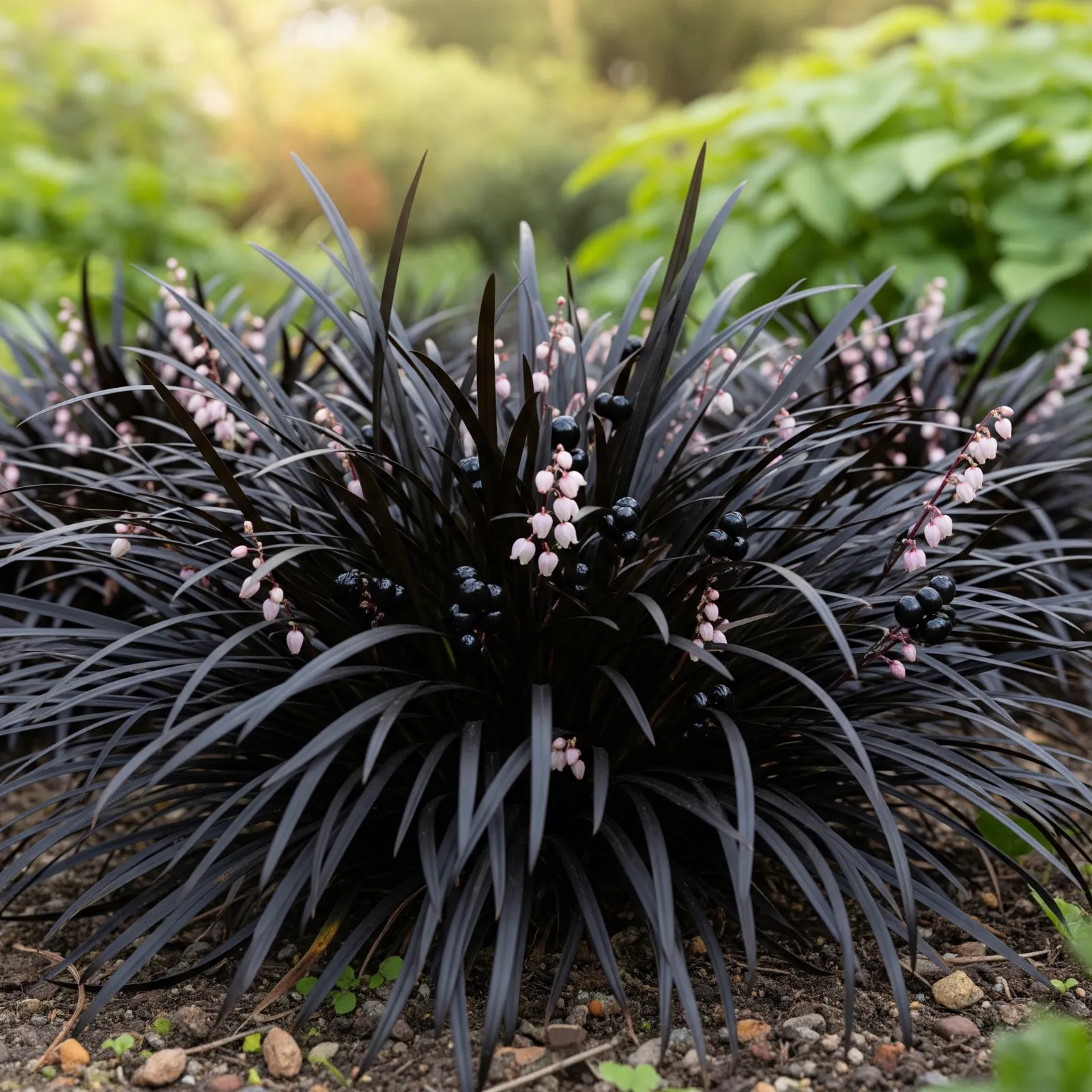
Black mondo grass or Ophiopogon planiscapus 'Nigrescens' is a slender-leaved plant with a very dark purple color that from a distance can appear almost black. Its elongated leaves and clumping growth give this plant a modern impression without looking too flashy. Its deep color is very striking when placed alongside green-leaved plants or brightly colored flowering plants.
This plant is suitable for use as a border, ground cover for specific areas, or an accent around garden stones. Its clumping leaves can provide a different texture compared to broad-leaved plants. When planted in groups of a certain number, black mondo grass can also create a more dramatic appearance because its dark color forms a strong visual field.
For care, use a planting medium that has good drainage and adjust watering according to environmental conditions. Light requirements may vary based on growing conditions, but this plant generally can be used in areas with either sunlight or partial shade. Before planting in large quantities, it is advisable to adjust to the climate and location conditions as its performance may differ in tropical areas compared to its native regions.
Coleus is a plant known for its highly diverse leaf color variations. In addition to combinations of green, red, and yellow, there are also cultivars with predominantly dark purple, blackish red, or deep maroon leaves. These colors make coleus an attractive choice for homeowners looking to add dark accents without using large-sized plants.
The advantage of coleus lies in its leaf shape and color, which easily become the center of attention. This plant can be grown in pots, placed on terraces, or used as part of a garden composition. Its dark-colored leaves will stand out even more when combined with light green plants or white and pink flowers.
Coleus care is relatively easy as long as its light and water needs are met. Some varieties prefer bright light but should be protected from excessive heat, especially in hot conditions. Watering should be done when the medium starts to dry out, and the pot should not be allowed to remain continuously waterlogged. Periodic pruning of the tips can also help the plant stay bushy and produce a more attractive shape.
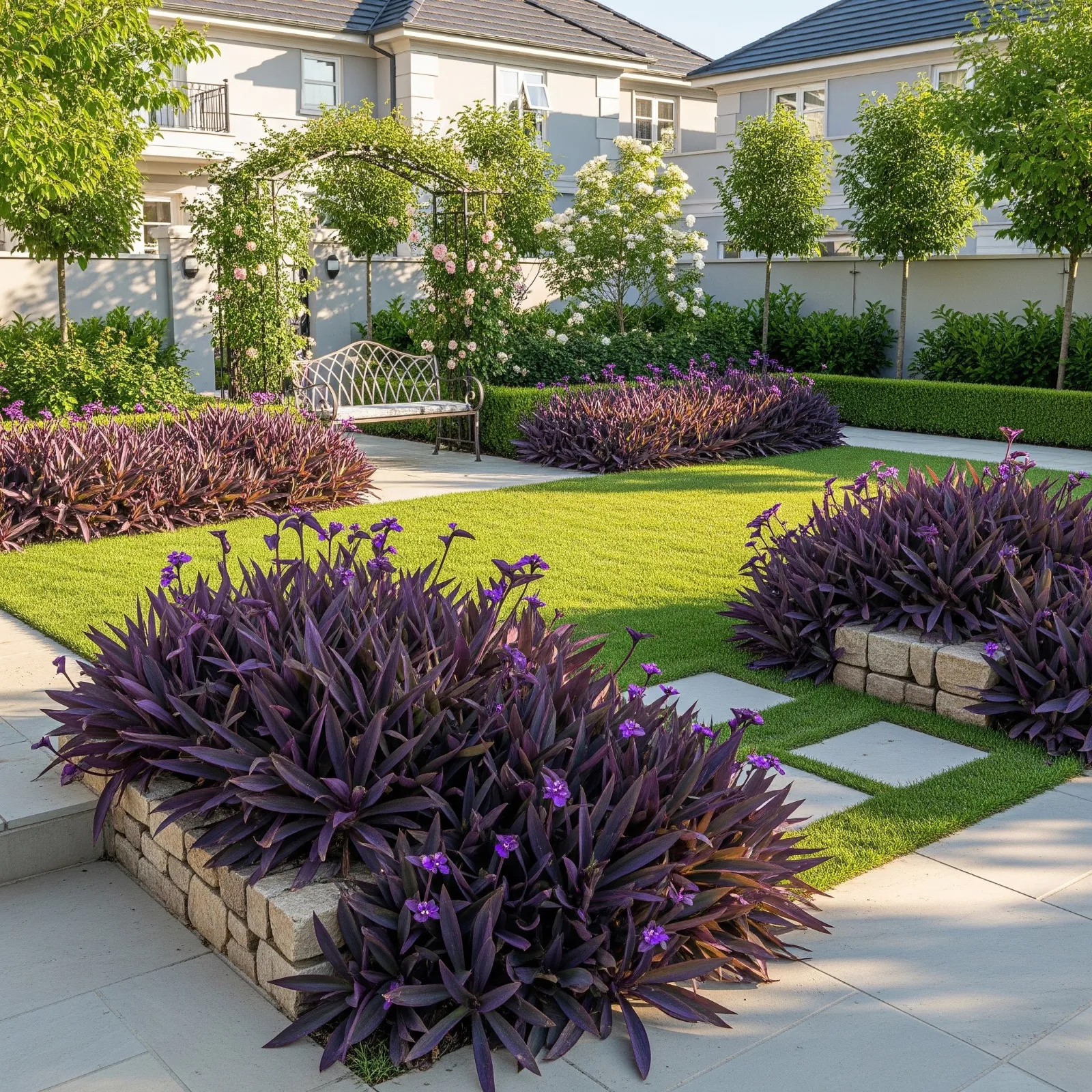
Purple heart or Tradescantia pallida is known for its deep purple leaves and stems that have a similar hue. This plant can grow as a vine, making it suitable as ground cover, border plants, or potted plants. Its purple color appears more vibrant when given the right lighting, allowing it to serve as a contrasting accent among green plants.
This plant is appealing for modern, tropical, or minimalist gardens due to its simple shape but strong color. Purple heart can also be used in hanging pots or containers that allow its stems to cascade. When planted along garden edges, its growth can form a line of purple that creates a more structured appearance.
Its care is relatively simple. Use media that does not retain water easily and provide adequate light to keep the leaf color attractive. Watering should be adjusted according to the conditions of the media and weather. If the plant becomes too long or untidy, its stems can be pruned to maintain shape while encouraging new growth.
Persian shield or Strobilanthes dyerianus has purple leaves adorned with a silvery effect, making it very decorative in appearance. The surface of the leaves can give the impression of having a metallic sheen when exposed to light. The combination of purple and silver colors makes this plant an easy focal point in gardens or terraces.
This plant is well-suited to be paired with plain green plants because its leaf color is already quite strong. If placed among plants with overly vibrant colors, the visual character of the Persian shield may become less noticeable. Therefore, use simple green plants as companions to make its silvery purple color stand out more.
Persian shield generally prefers humid conditions with well-draining media. Filtered bright light can help maintain the leaf color, while exposure to harsh sunlight under certain conditions can cause leaf stress. Light pruning can also be done to keep the plant bushy and prevent it from growing too leggy.
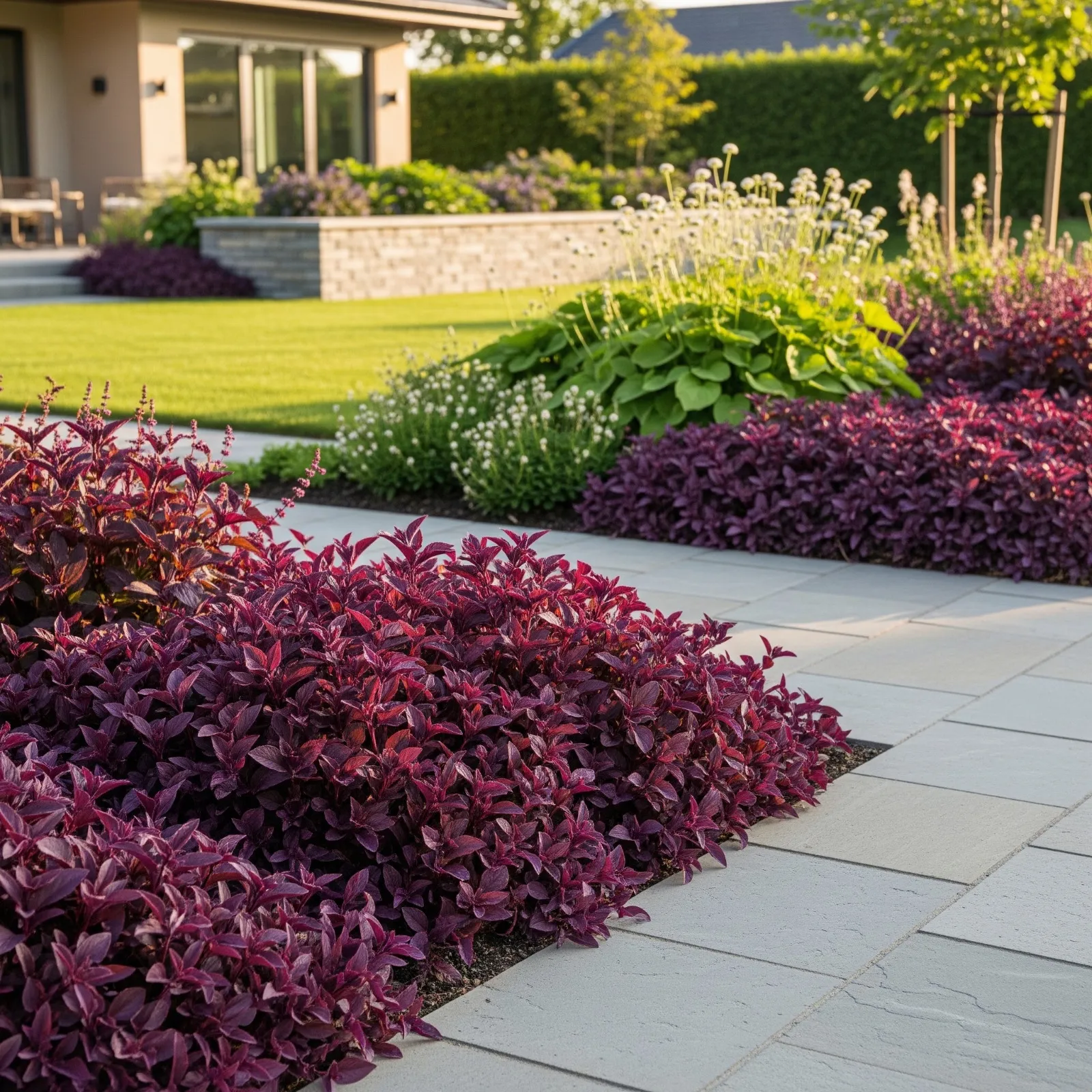
Alternanthera has many varieties with diverse leaf colors, including dark red, burgundy, and deep purple. This plant can be used as a decorative foliage plant to provide a dark color accent in the garden. Its relatively manageable size makes it suitable for planting in pots or as part of a small garden.
The color of its leaves can create a strong contrast when paired with green-leaved plants or brightly colored flowers. Alternanthera is also attractive when planted in groups as it can form a clearer field of color. In a minimalist garden, several clumps of plants with dark colors can be used as accents to avoid an overly monotonous yard appearance.
Its care requires fertile media with good drainage. Sufficient light can help maintain the leaf color, but light requirements may vary based on the variety. Regular pruning can be done if the plant starts to spread too much or loses its shape. With proper pruning, the plant can remain looking dense and tidy.
Begonia rex is one of the ornamental foliage plants known for its diverse patterns and colors of leaves. Some of its cultivars have a combination of dark purple, maroon, gray, and silvery colors that create a very decorative appearance. Although not all parts are dark-colored, the rich color combinations of its leaves can give an elegant impression when used as a decoration for a terrace or a sheltered garden area.
The beauty of begonia rex mainly lies in the texture and patterns of its leaves. Because of its quite complex appearance, this plant does not require many companion plants with striking colors. One or several pots of begonia rex can serve as a distinctive accent in a corner of the garden. This plant is also suitable for areas that need a touch of color without relying on flowers.
Begonia rex generally prefers bright indirect light or filtered light. The growing medium should have good drainage but still be able to retain adequate moisture. Avoid continuously wet conditions in the medium as it can increase the risk of root problems. Also, pay attention to the air circulation around the plant to keep the leaves healthy.
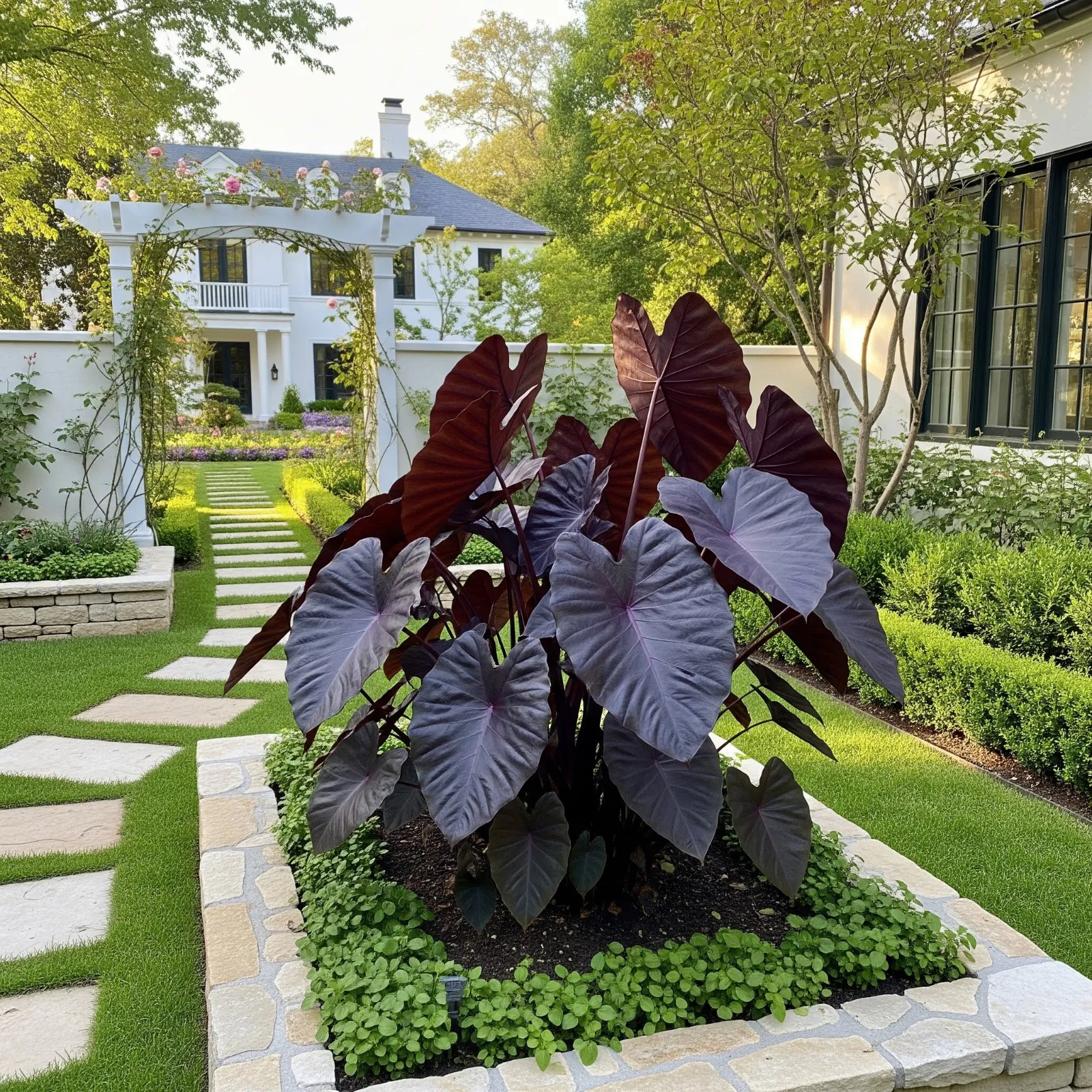
Black coral elephant ear is a group of large-leaved plants with dark colors that can create a dramatic effect in the garden. Its wide leaves and very dark color make this plant easily become a focal point. When placed among green plants, the contrast in color and leaf size will create a strong visual impact.
Large-leaved plants like this are suitable for use as a focal point in garden corners, near walls, or as a main element in tropical garden compositions. You don't need to plant too many because one plant alone can already provide a significant visual impact. Smaller green companion plants can help accentuate its leaf shape.
Care requirements depend on the type or cultivar used. Ensure that the planting location has suitable light conditions and that the media does not experience prolonged waterlogging. Because of its large leaves, the plant may require more water compared to smaller-leaved plants, especially during hot weather. However, water needs should still be adjusted to the media conditions to prevent the roots from being constantly too wet.
Petunias with very dark colored flowers, including cultivars that appear almost black, can be a choice if you want to present dark colors not through leaves, but through flowers. The deep flower color gives an elegant and slightly mysterious impression. When combined with white, pink flowers, or green plants, its dark color can become a very interesting accent.
This plant is suitable for pots, balconies, terraces, or garden areas that receive adequate light. The dark-colored flowers can be used as a focal point in a flowering plant composition. To avoid a heavy appearance, combine it with light-colored pots or companion plants with green leaves.
Petunias generally require sufficient lighting to produce good growth and flowering. Watering should be done regularly but avoid letting the medium remain waterlogged. Remove wilted flowers periodically if necessary to keep the plant looking tidy and to support the emergence of new flowers, according to the character of the variety being grown.
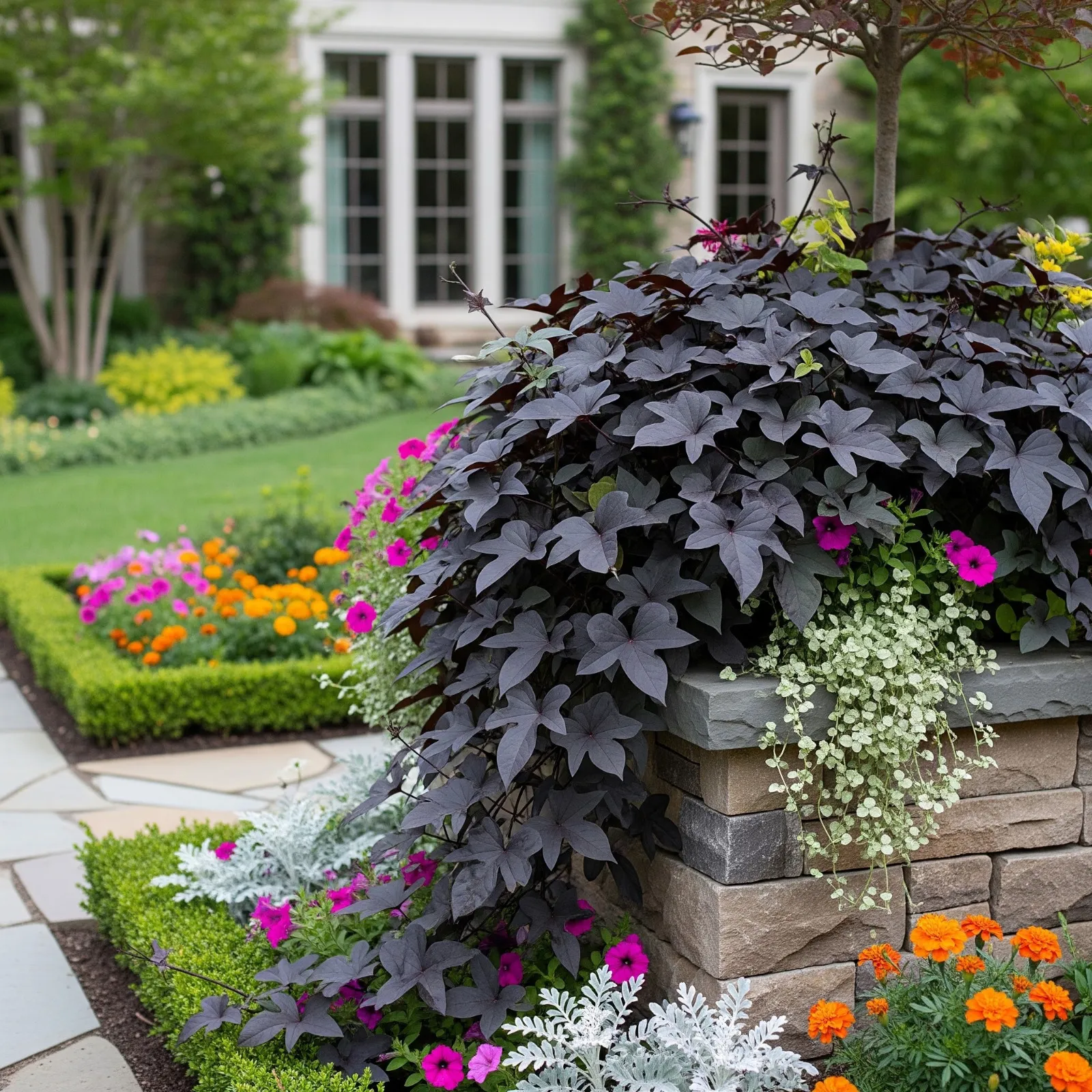
The ornamental sweet potato plant with dark leaves can be a choice to provide a cascading effect in gardens or pots. Its leaves have a dark purple to almost black color, while its growth tends to be creeping or trailing. This characteristic makes the plant suitable for filling empty areas in large pots, garden edges, or containers placed higher.
The color of its leaves will appear even more attractive when combined with plants that have bright green leaves or brightly colored flowers. The contrast between the wider leaf shape and its dark color can make the plant composition look fuller. This plant can also help create a layered impression in the garden as its growth can trail over the edges of the pot.
Its care is relatively easy, but the rapid growth needs to be controlled so it doesn't take up too much space. Trim any excessively long parts if necessary and direct its growth according to the garden design. Ensure that the medium has good drainage and the plant's light requirements are met. Because the characteristics of varieties can differ, check the plant label before determining the planting location.
A succulent plant with a rosette shape and dark purple to almost black color can provide a very elegant appearance. One group that is often used as an ornamental plant is Aeonium, including dark-colored cultivars like 'Zwartkop'. The shape of its leaves is arranged like a rose, so even though it does not have large flowers, this plant remains visually appealing.
Rosette-shaped plants like this are suitable for minimalist gardens, rock gardens, or decorative pots. Its dark color will stand out even more when placed among light-colored stones or smaller green plants. Because of its fairly symmetrical shape, a single plant can serve as a focal point, or several plants can be arranged in a composition with varying heights.
As a group of succulents, Aeonium requires a medium with good drainage and does not like conditions where the roots are constantly submerged. Watering needs should also be adjusted according to weather conditions and the growth phase of the plant. Adequate light helps maintain its color and shape, but extreme heat conditions need to be considered as the needs of each cultivar can vary. Before planting, make sure the chosen type is suitable for the climate and garden conditions at home.
Some options to consider include black mondo grass, dark-leaved coleus, purple heart, Persian shield, purple Alternanthera, Begonia rex, dark-leaved elephant ear, dark petunia, dark-leaved ornamental sweet potato, and dark-colored Aeonium. Choose based on light conditions, humidity, garden size, and maintenance capability.
Yes. Plants with deep purple, maroon, or nearly black leaves can actually become strong accents in minimalist gardens. Combine them with simple green plants, natural stones, white or gray pots, and simply designed decorative elements to keep the look from being too crowded.
Dark colors provide contrast against green plants and brightly colored garden elements. The contrast can create a dramatic, modern, and classy impression. Dark-colored plants can also be used as a focal point, making the garden interesting even without many ornaments.
Not all of them. Light requirements depend on the type and variety of the plant. Some plants can thrive well with filtered bright light, while others require more sunlight exposure to keep their leaf colors vibrant. Therefore, check the plant's needs before determining the planting location.
Make sure the plants receive lighting according to their needs, the growing medium has good drainage, and watering is not excessive. Some plants with purple or dark colors may lose color intensity if the light conditions are not suitable. Regular pruning can also help maintain the plant's shape neatly.
(kpl/iya)
Cobain For You Page (FYP) Yang kamu suka ada di sini,
lihat isinya
These tricks for organizing kitchen drawers help keep cooking utensils from getting messy and make them easier to find.

Discover a list of items that are often placed in the wrong spot and make your home messy quickly, complete with easy tips to tackle them every day.
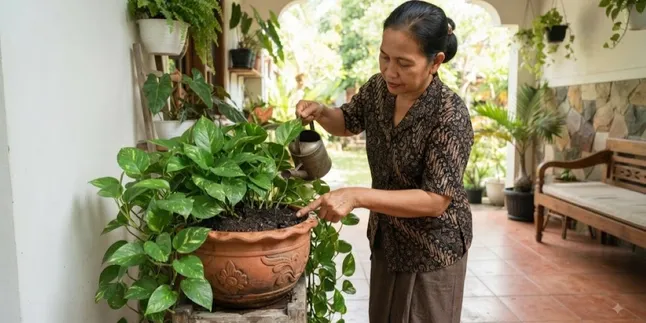
Is your pothos wilting in the hot terrace? Let's check out how to care for pothos in a hot terrace so its leaves don't yellow and wilt.

Discover the most effective and safe ways to remove fuzz from hijabs. A complete guide to caring for your beloved hijab to restore its smoothness like new, supported by textile expert research.

From inspiring true stories to satirical dramas, these films about the struggle of job hunting present a portrait of the realities of the professional world.
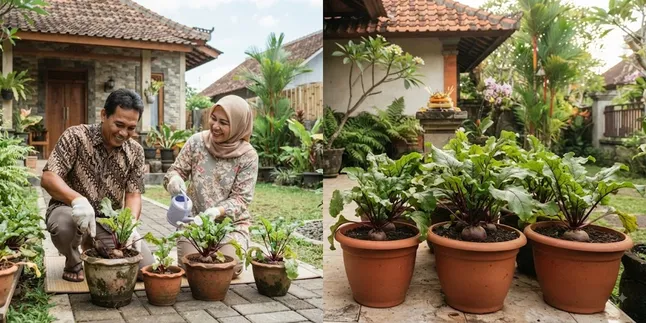
How to grow beets in pots for beginners, from choosing pots, planting seeds, caring, to harvesting.

8 disaster movies based on true stories and the original tales behind them, from Titanic to The Impossible.
How to care for orchids to bloom quickly with a complete guide on lighting, watering, fertilizing, and the ideal temperature for maximum results.
How to easily plant avocado from seed at home, starting from germination to being transferred to a pot.

The sentences typically uttered by psychopaths during conversations often sound normal. Recognize 10 signs to avoid being easily manipulated by those close to you.

Here are 12 ways to avoid feelings of loneliness while solo traveling so that your journey remains fun, comfortable, and memorable. Let's take a look.

Recommendations for movies with the saddest endings from the West, Korea, Japan, and Thailand that are sure to make the audience's hearts ache.
