

 Follow
 Rekomendasi
9 Ways to Grow Romaine Lettuce at Home, Easy for Beginners
How to grow romaine lettuce at home, from choosing seeds to harvesting fresh and crunchy leaves.
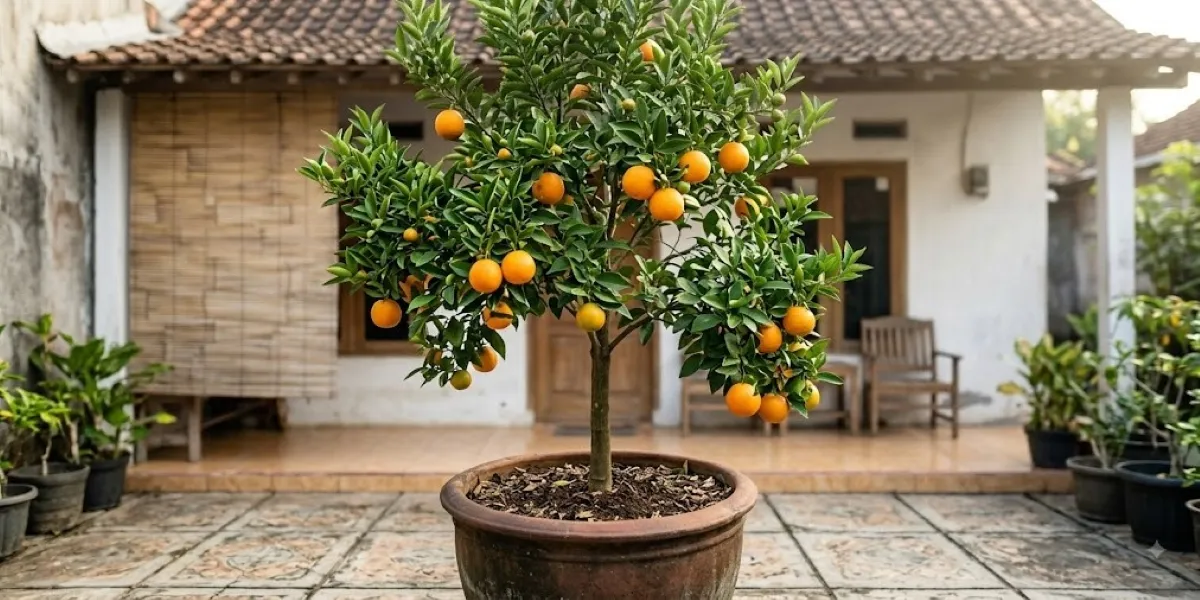
Kapanlagi.com - Having your own orange tree doesn’t have to wait until you have a large yard. With pots, the plants can be placed on the terrace or in a corner of the yard that gets sunlight. The way to plant Sunkist oranges in pots can also be done from seedlings available at plant stores, as long as the basic needs of the plants are met from the start.
Sunkist oranges are among the plants that can grow in containers. However, the limited root space makes the selection of pots, planting media, water, and location important to consider. Mistakes at the initial stage can make Sunkist orange plants difficult to grow, so the time spent caring for them does not yield the expected results.
In this article, you can find the way to plant Sunkist oranges in pots summarized by Liputan6.com from various sources, Tuesday (11/8/2026). You can also find some tips so that the trees can grow lush and bear abundant fruit. Let’s take a closer look at the full review below.
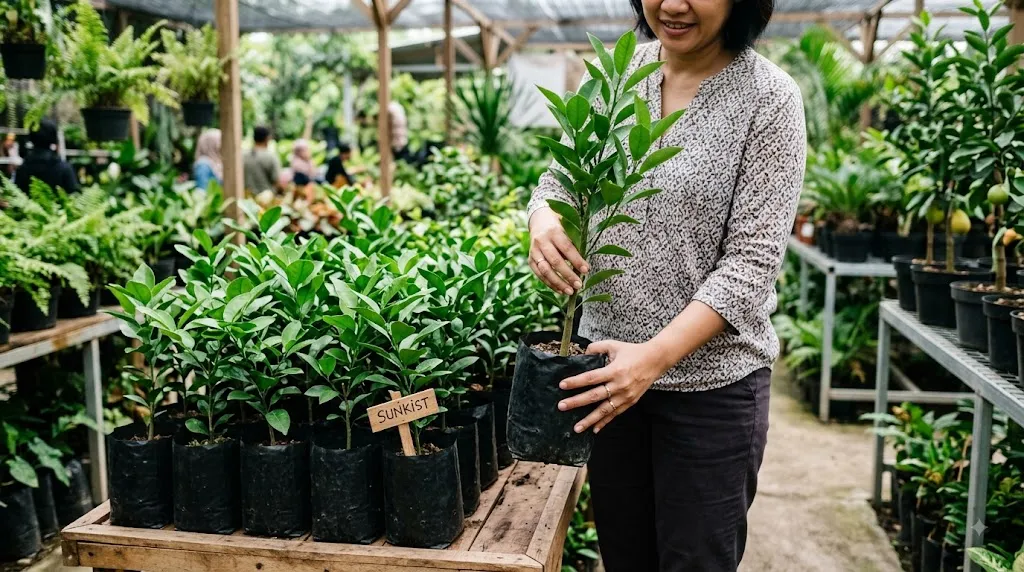
Choose Sunkist Orange Seedlings. (Image: AI Generated)
Seedlings are the first step that needs to be considered. For planting in pots, choose seedlings that are the result of vegetative propagation such as grafting or budding. Such seedlings can enter the fruit-bearing stage faster than those grown from seeds. Choose plants with upright stems that show no signs of pest attacks.
Also check the leaves and stems before purchasing. Avoid seedlings with many yellowing, wilting leaves, or those with spots. The stems should stand firm and show no wounds. If buying from a plant seller, ask about the origin of the seedlings and the type of propagation used to ensure that the plants you take home match your planting goals.
Seedlings do not need to be transferred directly to a very large pot. The size of the container can be adjusted to the size of the plant. Some guidelines suggest pots around 14–16 inches for small orange plants, and then the container can be replaced when the roots start to fill the space.
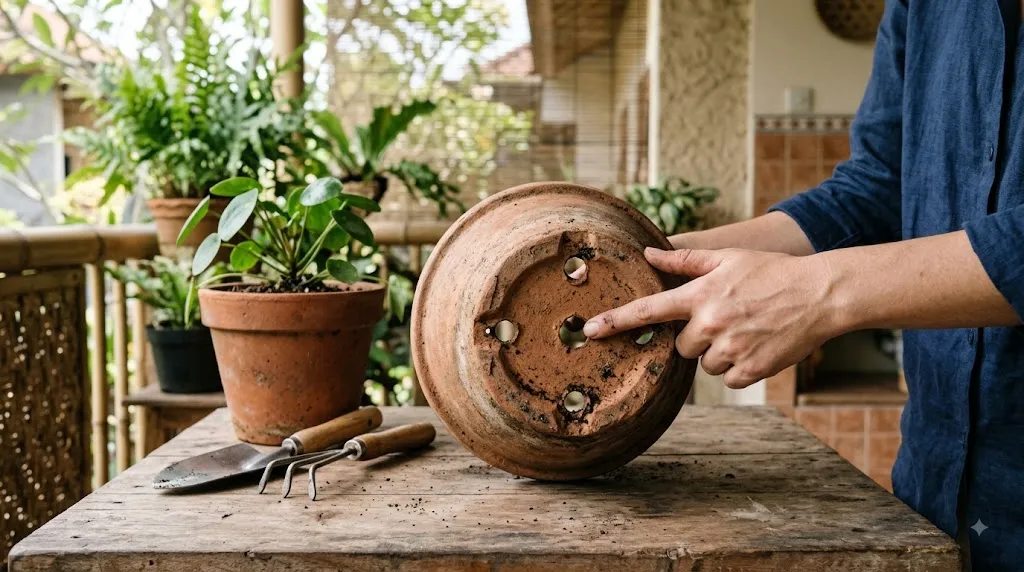
Prepare a Pot with Drainage Holes. (Image: AI Generated)
Use a pot that has holes at the bottom. These holes allow water to escape after watering. Orange plants require moist media, but the roots should not remain in water. Stagnant water can disrupt root conditions and cause the plant to experience growth problems.
The size of the pot should match the size of the seedlings. A pot that is too large can hold too much media and keep the unoccupied parts wet for longer. Conversely, a pot that is too small restricts root space. As the plant grows and the roots begin to fill the container, transfer it to a larger pot.
Place the pot on pot feet, bricks, or other supports so that the bottom does not sit directly on the floor. This helps water to escape from the pot holes. Ensure that the holes are not blocked by soil or other objects after the media is added.
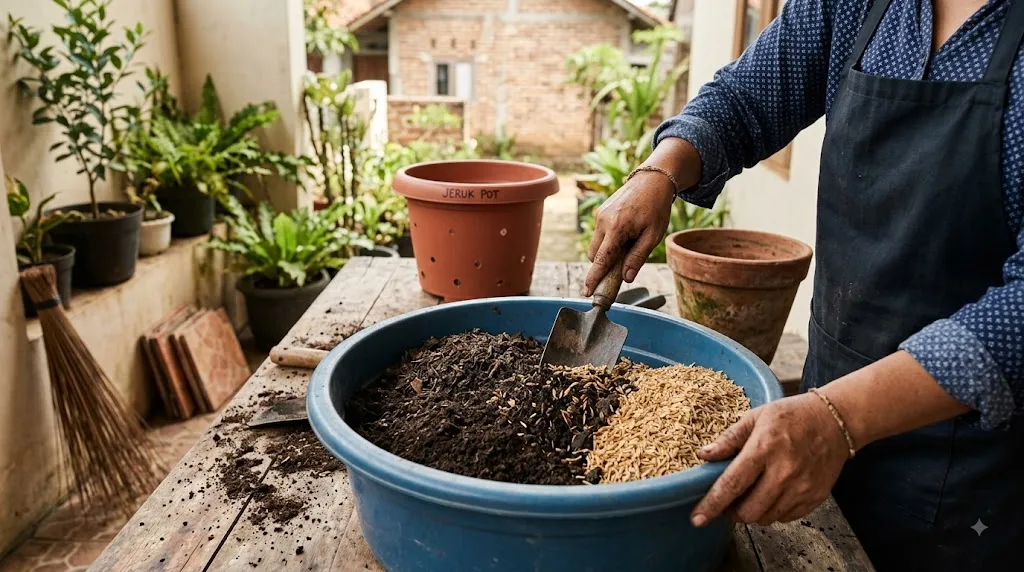
Mix the Growing Media. (Image: AI Generated)
The planting medium serves as a place for roots to obtain water, air, and nutrients. For citrus in pots, use a medium that can drain water. A mixture of soil, compost or manure, and rice husk can be used. One guideline for tabulampot suggests a ratio of 1:1:1 for the three materials.
Mix the materials evenly before placing them into the pot. Avoid using garden soil that is too dense as the sole medium. Guidelines from the University of California also recommend potting media that has drainage and does not use regular garden soil that is difficult to drain water.
Gradually add the medium and leave a few centimeters of space from the rim of the pot. This space helps when watering the plants so that water does not overflow immediately. Do not pack the medium too tightly as the roots need space to grow inside the pot.
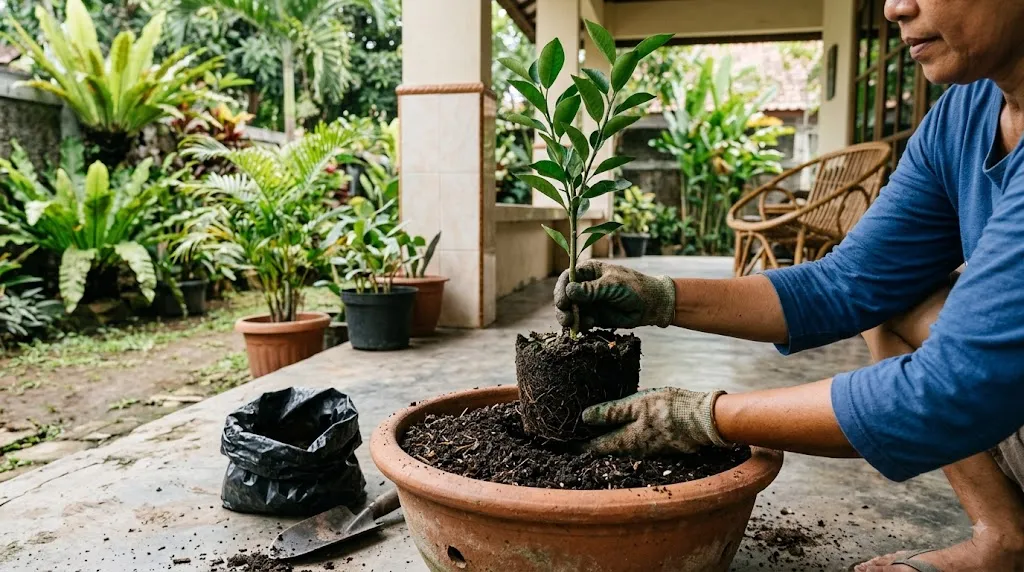
Transfer Seedlings into the Pot. (Image: AI Generated)
Before transferring the seedlings, water the plants in the polybag if the media feels dry. After that, carefully open the polybag so that the soil attached to the roots does not come off too much. Place the seedlings in the center of the pot and ensure the stem remains upright.
Add media around the root ball until it reaches the previous soil level. Do not plant the stem deeper than its position when it was in the polybag. For grafted plants, the graft union must remain above the surface of the media to avoid being covered by soil.
Press the media around the plant gently with your hands so that the seedlings do not easily shift. After planting is complete, water until water drains from the bottom holes of the pot. This method helps thoroughly moisten the media and reduces excessive air pockets around the roots.
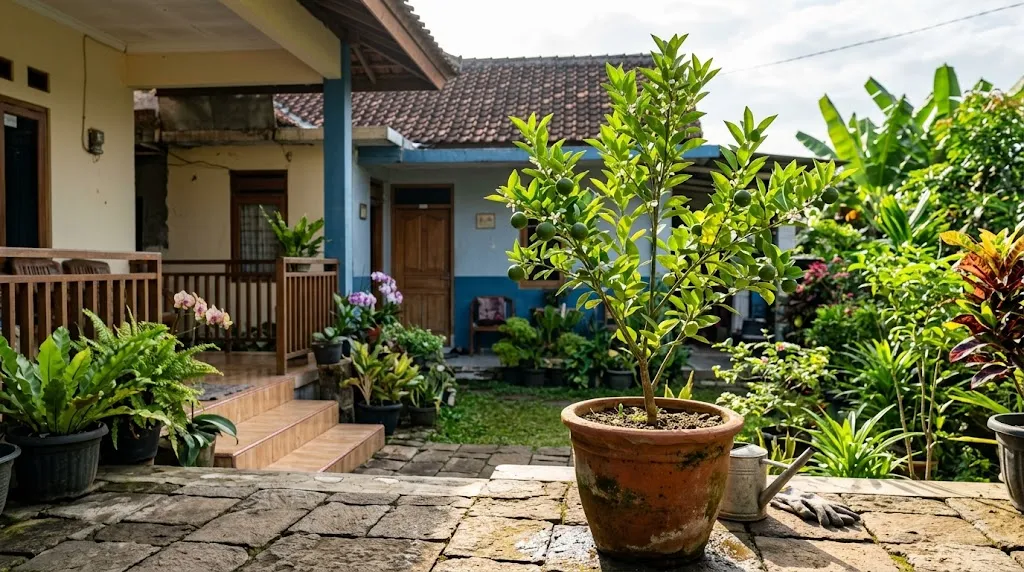
Place in a Well-Lit Area. (Image: AI Generated)
After planting, do not immediately move the seedlings from a shaded area to full sun exposure for a long time. Newly transferred plants are adjusting. Provide light gradually, then place the pot in a location that receives direct sunlight.
Citrus plants need at least six hours of direct sunlight every day. Light also plays a role in the formation of flowers and fruit. Therefore, an open terrace, yard, or other areas that are not obstructed by buildings can be a good choice.
If the seedlings were previously in a shaded location, gradually move them over several days. Sudden changes in light can cause stress to the leaves. Once the plants start to adjust, maintain a location with sufficient light each day.
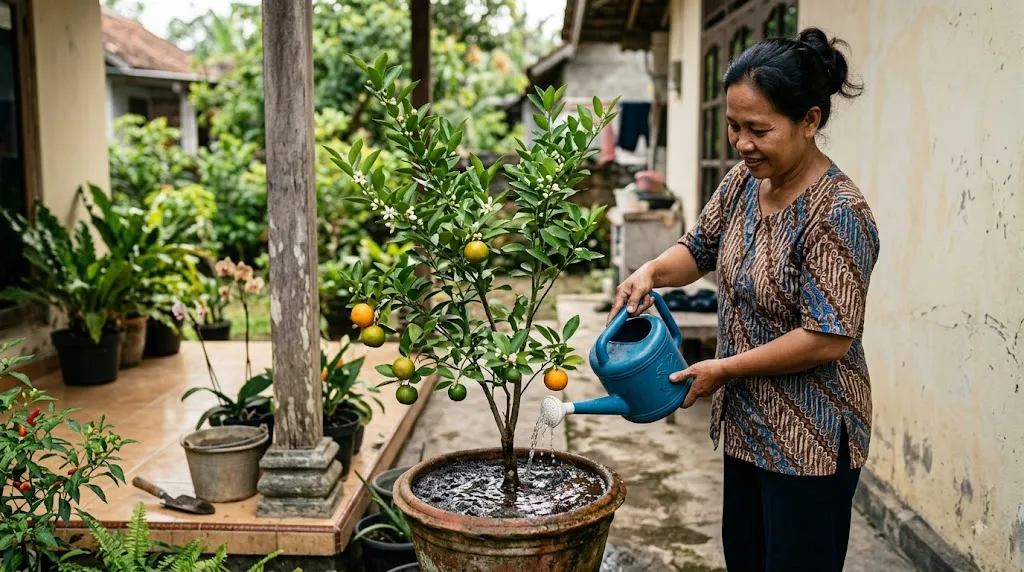
Water According to the Condition of the Media. (Image: AI Generated)
Watering does not need to follow the same schedule every day. Check the media first by touching the top. If it starts to dry out, water it. If it is still wet, wait until the moisture decreases. Water requirements can change according to the weather, pot size, and plant conditions.
When watering, provide enough water until it drains out of the bottom holes of the pot. After that, discard any water collected in the saucer. Do not let the pot sit in standing water because the roots of the orange tree need both air and water to grow.
In hot weather, the media in the pot can dry out more quickly. Therefore, checks need to be done more frequently. Conversely, when it rains, watering can be reduced. Pay attention to the condition of the media, not just follow the same amount of watering every day.
Potted orange plants have limited media space, so nutrients need to be provided regularly. Use fertilizer for orange plants according to the instructions on the packaging. Fertilizers with nitrogen content are also widely used to support the growth of leaves and stems.
Fertilization should not be done excessively. Follow the dosage indicated on the product and adjust it according to the age of the plant. Potted plants can receive fertilizer more frequently than plants in the ground because nutrients are more easily washed away during watering.
Pruning can be done to remove branches that grow from below the joint, dead branches, or parts that grow in unwanted directions. Pruning does not need to be done too often. Focus on parts that disrupt the shape and growth of the plant.
After the seedlings have been successfully transplanted, subsequent care needs to be performed regularly. Observe changes in the leaves, the condition of the medium, branch growth, and the appearance of flowers. Some simple habits can help keep the plants thriving in pots.
1. Check the Medium Before Watering: Touch the top of the medium before giving water. This method helps avoid watering when the medium is still wet and reduces the risk of roots staying in water for too long.
2. Provide Light Every Day: Place the pot in a location that receives at least six hours of direct sunlight. If the plant lacks light, growth and flower formation may be affected.
3. Do Not Close the Pot Hole: Make sure the hole at the bottom of the pot remains open. Check regularly as roots or media can clog this part and prevent water from draining.
4.Keep Media Away from the Base of the Stem: Do not pile the media too high to cover the base of the stem. Leave the base part visible to reduce moisture conditions around the stem.
5.Clean Leaves Regularly: Check the surface of the leaves during maintenance. Clean off any dust with a cloth or water so that the condition of the leaves can be observed and changes in the plant are easier to notice.
6.Check the Underside of the Leaves: Pests on citrus plants can be found on the underside of the leaves. Check the underside of the leaves regularly so that changes such as spots, insects, or curled leaves can be detected promptly.
7.Replace the Pot When Roots Fill the Container: When the roots start to fill the pot, move the plant to a larger container. Media replacement can also be done periodically to provide space for root development.
8.Do Not Rush to Get Fruit: Plants need time to grow before entering the fruiting phase. Seedlings from grafting or cuttings generally fruit faster than seedlings from seeds, but the timing still depends on the plant's conditions.
1. Can Sunkist oranges be grown in pots?
Yes. Orange plants can be grown using a pot cultivation system. The key is to provide a pot with drainage, a medium that can drain water, sunlight, water, and nutrients according to the plant's needs.
2. How long does it take for potted Sunkist oranges to bear fruit?
The time to bear fruit depends on the type and age of the seedlings. Seedlings from grafting or budding generally bear fruit faster than those from seeds. Light, water, nutrients, and care also affect this timing.
3. How often should potted Sunkist oranges be watered?
There is no uniform amount for every condition. Check the medium before watering. When the top starts to dry out, water until it drains from the pot's holes. In hot weather, checks need to be done more frequently because the medium in the pot can lose water quickly.
4. How long do Sunkist oranges need sunlight?
Orange plants require at least six hours of direct sunlight every day. For potted plants intended to produce fruit, more light can help with growth and flowering.
5. Why are Sunkist orange leaves turning yellow?
Yellowing leaves can be related to several conditions, including overwatering, nutrient deficiency, or root problems. Check the moisture of the media and drainage holes first before adding fertilizer. If the media remains wet, improve water flow and reduce watering.
Yellowing leaves can be related to several conditions, including overwatering, nutrient deficiency, or root problems. Check the moisture of the medium and the drainage holes first before adding fertilizer. If the medium remains wet, improve water flow and reduce watering.
(kpl/bim)
Cobain For You Page (FYP) Yang kamu suka ada di sini,
lihat isinya
How to grow romaine lettuce at home, from choosing seeds to harvesting fresh and crunchy leaves.
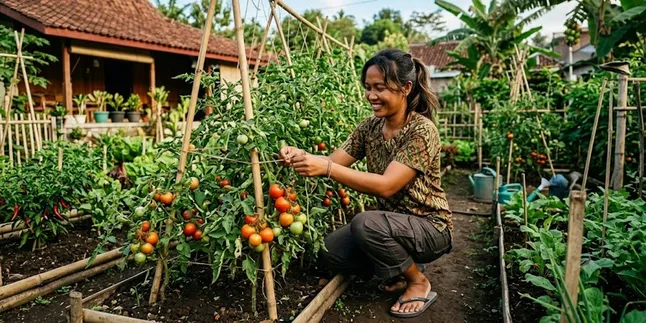
Avoid tomato fruit rot by understanding its causes and applying the right cultivation strategies, from variety selection to intensive care for quality harvests.
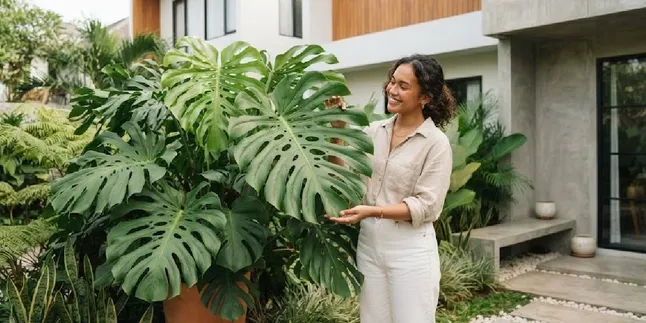
Caring for monstera to ensure its leaves are large and healthy can be done by paying attention to light, watering, planting media, and humidity.
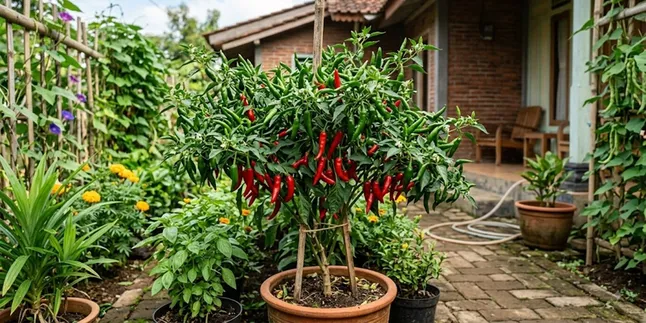
How to fertilize chili plants for quick flowering and fruiting with proper care, fertilizer, water, and light.
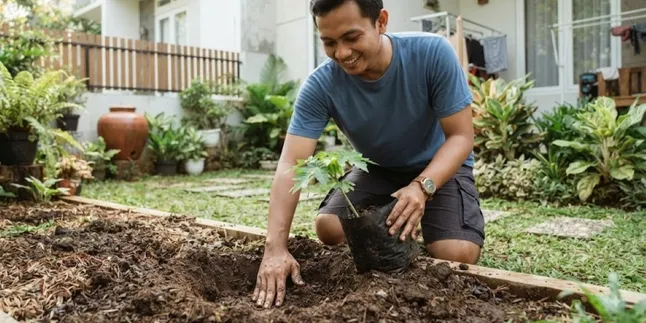
A guide to cultivating California papaya (callina) from seeds to bountiful harvest. Plus, a bonus recipe for spicy sweet Korean tempeh to accompany your gardening activities.
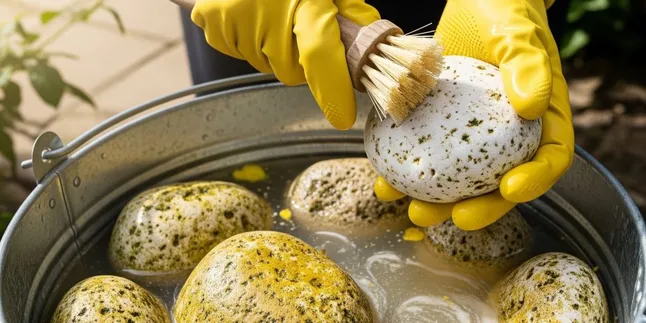
Are your white garden stones starting to yellow and grow moss? Check out 7 ways to clean white garden stones to make them bright, clean, and pleasant to look at.
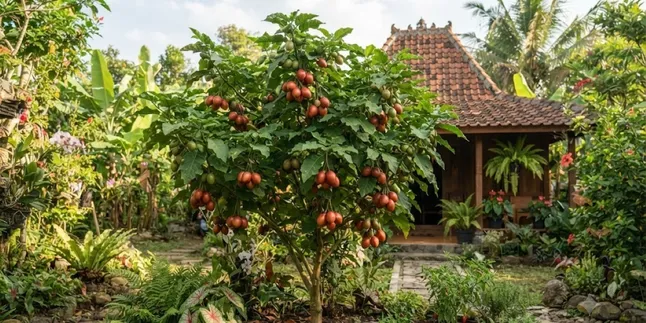
Discover the complete guide on how to grow Tamarillo in your home garden, from seed selection to harvest. Realize an exotic fruit garden rich in nutrients easily.
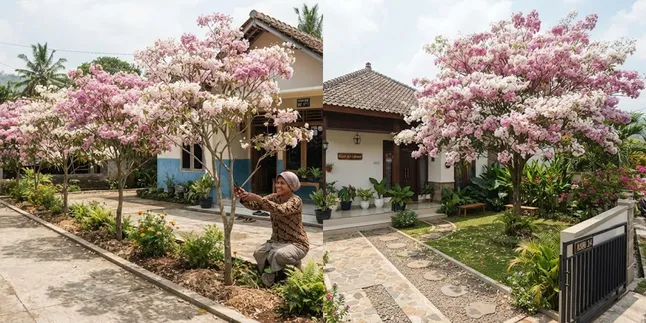
Discover effective ways to care for the Tabebuya tree to encourage frequent flowering with these eight easy steps.

Transform your life to be more successful through these 12 magical micro habits. Starting with small, routine habits, your dreams can become a reality quickly.
Discover 6 best drinks for brain health that you can consume every day.

Liking to compare others can reflect certain character traits. Recognize 8 characters of people who like to compare others according to psychology.
Paper towels are often used for cleaning, but there are several items that should not be cleaned with paper towels. Check out the explanation here.
